Who Invented the Smith Machine? The Untold Story of Jack LaLanne and Rudy Smith
Who Invented the Smith Machine? The Untold Story of Jack LaLanne and Rudy Smith
The Smith Machine is a weight training apparatus featuring a barbell fixed within vertical steel rails, allowing only controlled up-and-down movement. Who invented the Smith Machine? Jack LaLanne created the original prototype in the early 1950s, while Rudy Smith refined and commercialized the design. This article traces the machine's journey from a napkin sketch to a fixture in gyms worldwide.
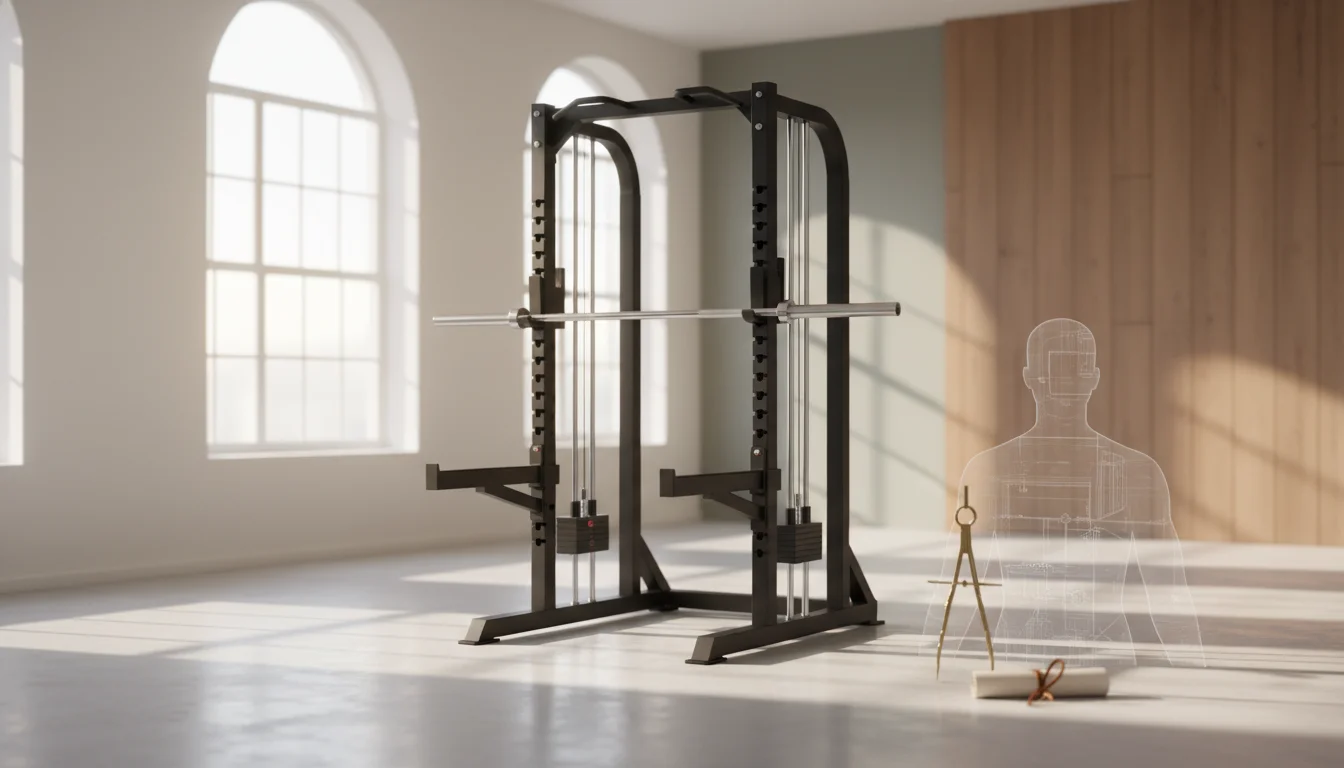
The Short Answer: Jack LaLanne and Rudy Smith Co-Created the Machine
Two men share credit for this iconic piece of gym equipment, each contributing something essential.
Jack LaLanne designed the original prototype in the early 1950s as a way to perform heavy squats safely without a spotter. Rudy Smith, a gym manager and bodybuilding champion, recognized the commercial potential in LaLanne's concept. Smith then partnered with machinist Paul Martin to engineer a production-ready version.
| Contributor | Role | Contribution |
|---|
| Jack LaLanne | Original Inventor | Sketched prototype concept, designed vertical rail system |
|---|---|---|
| Rudy Smith | Improver/Marketer | Refined mechanism, commercialized through Vic Tanny gyms |
| Paul Martin | Manufacturer | Built first production models |
The machine bears Smith's name because he drove its adoption across American gyms. LaLanne never sought naming rights—he viewed the machine as one invention among many in his mission to make fitness accessible. [Physical Culture Study] documents this collaborative origin story in detail.
Jack LaLanne: The Godfather of Fitness and Original Inventor
LaLanne opened one of America's first modern gyms in Oakland, California, in 1936, nearly two decades before the Smith Machine existed.
His philosophy centered on making strength training safe for ordinary people. At the time, heavy lifting meant risking serious injury without a spotter present. LaLanne wanted equipment that eliminated this barrier.
The Smith Machine prototype emerged from this mindset. LaLanne sketched the concept during a conversation with Rudy Smith, reportedly drawing it on a napkin. The design was elegantly simple: a barbell attached to vertical rails that prevented sideways or rotational movement.
- Allowed users to rack the bar at any point during a lift
- Eliminated the risk of dropping a loaded barbell
- Made solo training with heavy weights practical
- Required no spotter for exercises like squats and bench presses
LaLanne invented dozens of exercise machines during his career. The leg extension machine, cable pulley systems, and weighted jumping shoes all came from his workshop. The Smith Machine was never his primary focus—it was simply one solution among many. [Major Fitness] calls him "the godfather of fitness" for good reason.
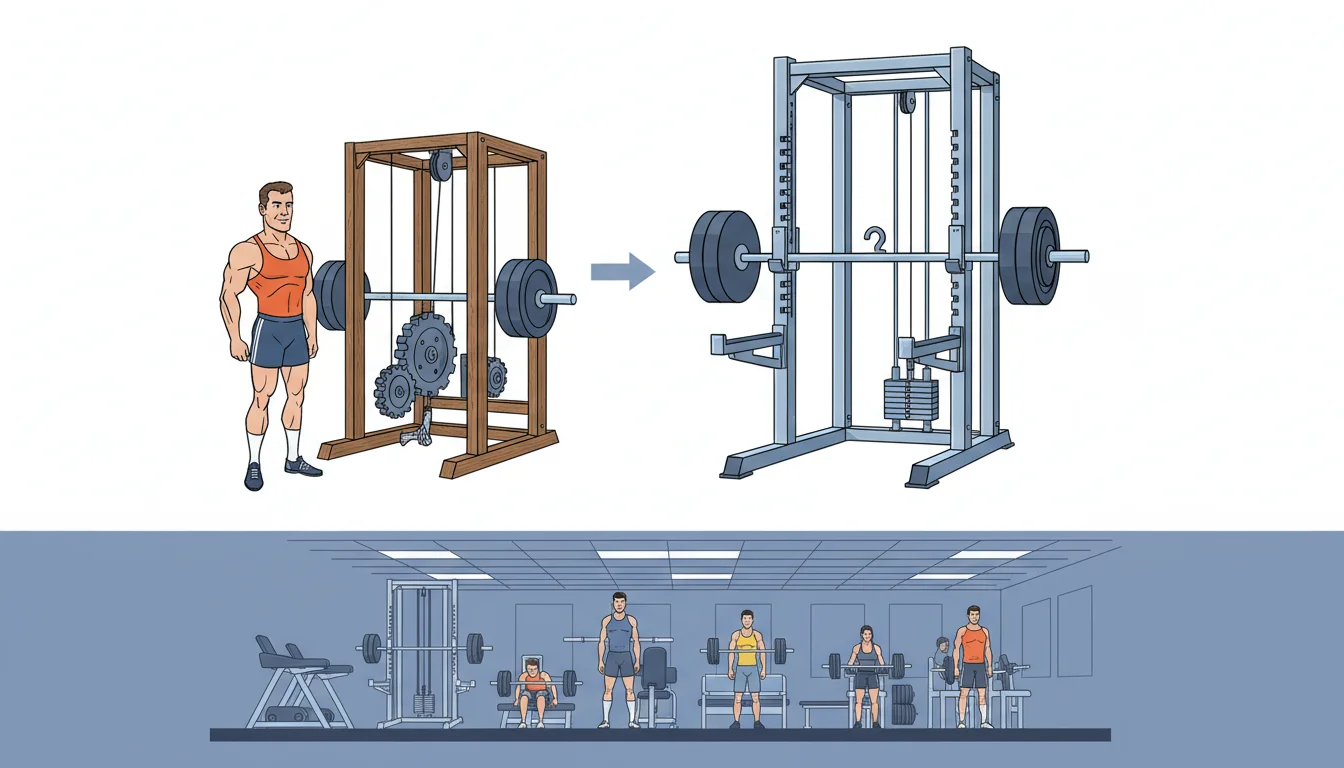
Rudy Smith's Role: From Gym Manager to Namesake
Smith transformed a sketch into a business. His contribution went far beyond putting his name on someone else's idea.
Working as a manager at a Vic Tanny gym in Los Angeles, Smith encountered LaLanne's prototype and immediately understood its potential. He contacted Paul Martin, a skilled machinist, to refine the sliding barbell mechanism. Together they solved the engineering problems that had prevented mass production.
Smith installed the first working machines at the Vic Tanny locations he managed. By 1960, he had risen to executive status within the gym chain. From that position, he pushed the machine into gyms across the United States.
The naming happened organically. Gym members asked what to call this new apparatus. Staff pointed to Smith. The name stuck. Gym Mikolo notes that LaLanne's original involvement faded from public memory as Smith's promotional efforts expanded.
The 1950s Fitness Industry: Context for the Invention
Post-WWII America experienced a fitness awakening, but the infrastructure barely existed.
Commercial gyms were a new concept. Most people associated weight training with circus strongmen or competitive bodybuilders. The idea of regular people lifting barbells seemed strange, even dangerous.
Free weights dominated available equipment, creating a real problem for anyone training alone.
| Challenge | Risk | Who It Affected |
|---|
| Squatting heavy | Bar slipping off shoulders | Solo lifters |
|---|---|---|
| Bench pressing | No one to help if you fail | Home gym users |
| Overhead pressing | Losing balance backward | Beginners |
| Progressive overload | Fear of attempting heavier weights | Everyone |
The Smith Machine directly addressed these concerns. A lifter could attempt a new personal record knowing the bar would catch on safety hooks if strength failed. This psychological safety net changed how people approached training.
Vic Tanny's gym chain grew rapidly during this period. They needed equipment that made customers feel confident, and the Smith Machine fit perfectly into this commercial expansion.
How the Original Smith Machine Worked
The mechanism was straightforward: restrict barbell movement to a single vertical plane.
Two steel guide rails stood parallel to each other, roughly shoulder-width apart. The barbell attached to sleeves that slid up and down these rails. Hooks on the bar could rotate to catch on pegs at multiple height positions along the rails.
- Guide rails: Prevented forward, backward, and lateral bar movement
- Rotating hooks: Allowed quick racking by twisting wrists forward
- Multiple catch points: Let users stop the lift at any height
- Fixed bar path: Eliminated the need for balance and stabilization
Early versions had no counterbalance. The bar itself weighed 15 to 25 pounds depending on the model, and users felt the full weight from the first inch of movement.
Modern Smith Machines look different. Many feature angled rails set at 7 degrees from vertical, mimicking a more natural bar path. Counterbalance systems reduce starting weight to near zero, and linear bearings have replaced bushings for smoother movement. [Valor Fitness] traces these evolutionary changes across decades.
Evolution of the Smith Machine: From 1950s to Today
The basic concept remained stable while every component improved.
Early models used simple bushings that created friction during movement. Lifters learned to work with this resistance, and some gyms kept these older machines precisely because the friction added training difficulty.
| Era | Key Features | Limitations |
|---|
| 1950s-1960s | Vertical rails, basic hooks | High friction, no counterbalance |
|---|---|---|
| 1970s-1980s | Improved bearings, standardized heights | Still vertical-only movement |
| 1990s-2000s | Angled rails, counterbalance systems | Fixed in single plane |
| 2010s-Present | 3D movement, integrated storage, digital tracking | Higher cost, complexity |
The 3D Smith Machine represents the latest evolution. These units allow limited horizontal movement while maintaining vertical guidance. Manufacturers market them as bridging the gap between free weights and traditional Smith Machines.
Counterbalance technology deserves special mention. Modern machines can reduce effective starting weight to 5 pounds or less, opening Smith Machine training to rehabilitation patients and complete beginners who couldn't handle a standard 45-pound barbell.
The Smith Machine's Impact on Modern Fitness Culture
Walk into any commercial gym worldwide, and you'll find at least one Smith Machine—often occupied.
The machine became essential for specific populations and purposes. Rehabilitation programs use it to rebuild strength after injury. Beginners learn movement patterns without fear of dropping weight. Bodybuilders isolate target muscles by removing stabilization demands.
- Planet Fitness built their brand partly around Smith Machines
- Physical therapy clinics stock them for controlled progressive loading
- Bodybuilders use them for targeted chest, shoulder, and leg development
- Solo home gym owners train heavy without needing a spotter
The controversy has never fully resolved. Functional training advocates argue that the fixed bar path creates unnatural movement patterns. They point to potential shoulder and knee issues from forcing joints into positions they wouldn't naturally follow.
Supporters counter that the machine serves its intended purpose: making heavy lifting accessible and safe. Neither side is entirely wrong—the tool works when applied appropriately.
LaLanne lived until 2011, reaching age 96. He never stopped promoting fitness, and the Smith Machine remained one small piece of his legacy: a practical solution to a specific problem. [Physical Culture Study] explores both the praise and criticism the machine has received over seven decades.
FAQ
Why is it called a Smith Machine if Jack LaLanne invented it?
Rudy Smith commercialized and promoted the machine through Vic Tanny gyms nationwide. Gym members associated the equipment with Smith because he installed and marketed it. LaLanne never pursued naming credit for his inventions.
Did Jack LaLanne patent the Smith Machine?
No documented patent exists from LaLanne for the Smith Machine design. His approach focused on innovation and accessibility rather than intellectual property protection, which allowed others to manufacture and sell variations freely.
Is the Smith Machine good for beginners?
Yes. The fixed bar path eliminates balance requirements, letting new lifters focus on pushing or pulling weight. Safety catches prevent the bar from falling if strength fails. Start with light weight to learn proper positioning.
What exercises work best on a Smith Machine?
Squats, bench presses, shoulder presses, and lunges perform well on this equipment. The machine excels for isolation work where removing stabilization helps target specific muscles. Rows and shrugs also work effectively.
Can you build muscle using only a Smith Machine?
Absolutely. Muscles respond to progressive resistance regardless of the source. Bodybuilders have used Smith Machines for decades to build impressive physiques, and the fixed path allows pushing closer to failure safely.
What's the difference between angled and vertical Smith Machines?
Angled versions tilt the bar path 7 degrees from vertical, following a more natural pressing and squatting trajectory. Vertical machines move straight up and down. Many users find angled versions more comfortable for compound movements.
How much does the bar weigh on a Smith Machine?
Bar weight varies by manufacturer, typically ranging from 15 to 25 pounds. Counterbalanced machines reduce effective starting weight further, sometimes to under 10 pounds. Check your specific gym's equipment for accurate numbers.
Did Rudy Smith or Jack LaLanne make money from the Smith Machine?
Smith likely profited through his executive role at Vic Tanny gyms as the machine drove membership and equipment sales. LaLanne's financial benefit remains unclear—he focused on his television show and gym business rather than equipment licensing.