Should I Buy a Smith Machine? A Complete Guide for Home Gym Owners (2025)
Should I Buy a Smith Machine? A Complete Guide for Home Gym Owners (2025)
A Smith machine is a weight training device featuring a barbell fixed within vertical steel rails, restricting movement to a guided path. Research shows Smith machine training produces comparable strength and muscle gains to free weights for targeted muscle groups. This guide covers the mechanics, benefits, drawbacks, and a decision framework to help you determine if a Smith machine is the right investment for your home gym.
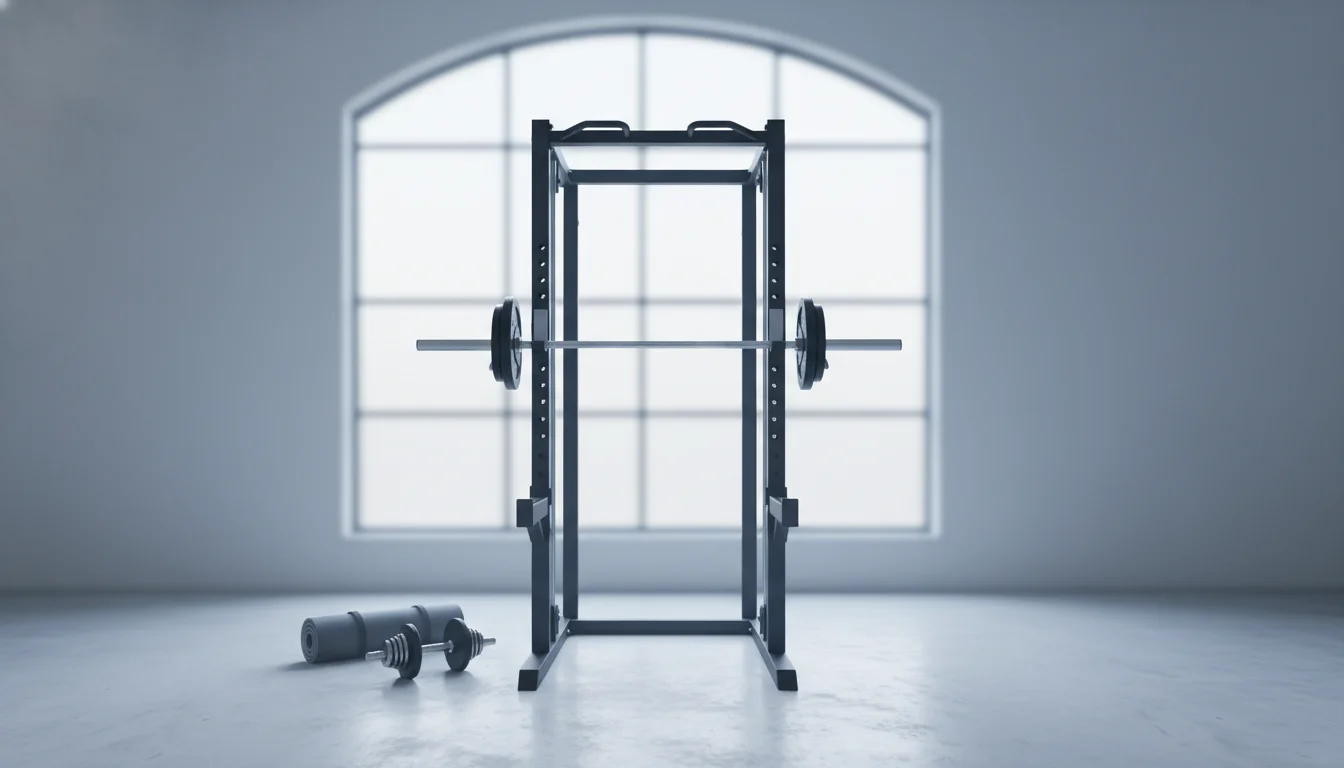
What Is a Smith Machine and How Does It Work?
The barbell travels along fixed steel rails, allowing only vertical movement, while safety catches let you lock the bar at multiple heights with a simple wrist rotation.
| Feature | Description | Training Impact |
|---|
| Vertical Rails | Steel guides restricting bar path | Eliminates lateral movement, focuses on primary movers |
|---|---|---|
| Angled Rails | 7-12 degree backward tilt | Mimics natural bar path for squats and presses |
| Safety Catches | Rotating hooks at multiple heights | Enables solo training without a spotter |
| Counterbalanced Bar | Reduces effective starting weight | Allows beginners to start lighter than a standard 45lb bar |
The guided movement pattern means your body adapts to the machine's path rather than finding its natural groove. This matters more for some exercises than others. Squats feel different on a Smith machine because your feet stay planted while the bar moves straight up. The Gym Revolution notes that this fixed path removes the need for horizontal stabilization entirely.
Key Benefits of Owning a Smith Machine
Safety catches and the fixed bar path let you train heavy without a spotter, push closer to failure, and bail instantly by rotating the bar hooks.
Safety advantages for solo lifters:- Lock the bar at any point during a failed rep
- No risk of the bar tipping or rolling
- Train to true muscular failure without fear
- Learn squat and press patterns with built-in stability
- Focus on muscle engagement without balance demands
- Build confidence before transitioning to free weights
- Isolate primary movers without stabilizer fatigue
- Maintain constant tension throughout the movement
- Load heavier weights safely for progressive overload
- Squats, bench press, overhead press, rows
- Lunges, calf raises, hip thrusts, inverted rows
- Drag curls, close-grip presses, shrugs
Chris Bumstead, multiple-time Classic Physique Mr. Olympia champion, uses Smith machines regularly for precise muscle isolation. Fitness Avenue reports that the machine excels at controlled progressive overload because weight increments happen predictably without technical breakdown.
Drawbacks and Limitations to Consider
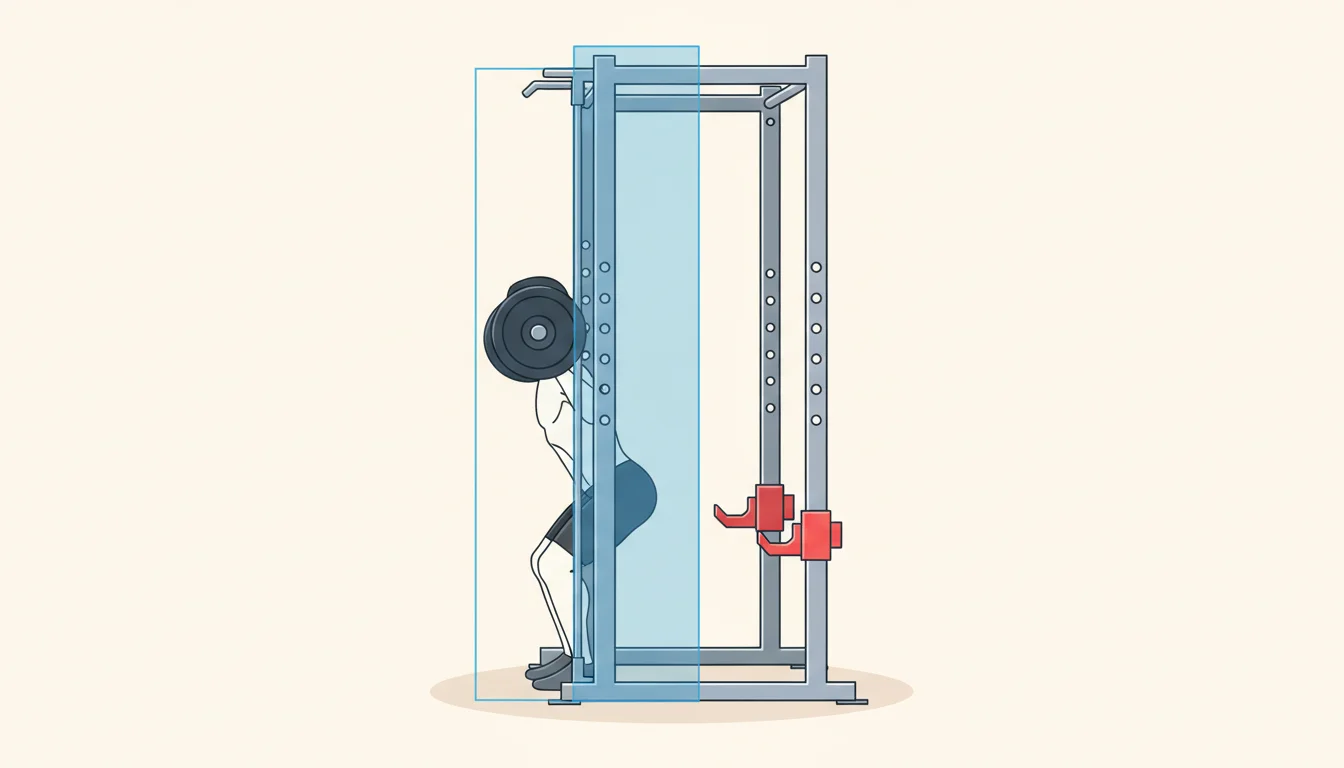
The fixed bar path forces your joints into predetermined angles that may not match everyone's anatomy, potentially causing shoulder and wrist stress during pressing movements.
Movement restrictions:- Vertical path doesn't match the natural pressing arc
- Knee and hip positioning becomes less intuitive on squats
- Shoulder impingement risk increases for some lifters
- Stabilizer muscles receive minimal activation
- Proprioception (body position awareness) decreases over time
- Strength transfer to real-world activities suffers
- Minimum footprint of 7x4 feet plus clearance space
- Quality units cost $800-2000+ for home use
- Cheap machines compromise safety and durability
EMG studies show 40% higher stabilizer activation in free weight squats compared to Smith machine squats. Mend Colorado found this difference significant for athletes who need functional strength. The machine builds muscle, but the strength you gain doesn't always transfer to movements outside the gym.
Smith Machine vs Free Weights: Which Is Better?
Both tools serve different purposes, and research shows neither is universally superior for building muscle or strength.
| Factor | Smith Machine | Free Weights |
|---|
| Stabilizer Activation | Low | High |
|---|---|---|
| Hypertrophy Potential | Comparable for primary movers | Comparable overall |
| Safety (Solo Training) | Excellent | Requires spotter for heavy lifts |
| Functional Strength | Limited transfer | High transfer |
| Learning Curve | Lower | Higher |
| Space Required | More (7x4 ft minimum) | Less (rack + platform) |
A meta-analysis in PMC found that machine-based training produces similar maximal strength increases as free weights for both trained and untrained individuals. The difference appears in how that strength applies outside the gym.
Free weights teach your nervous system to coordinate multiple muscle groups simultaneously. Smith machines let you overload specific muscles without coordination demands. Smart programming uses both. I learned this the hard way after six months of Smith-only training left me struggling with a barbell squat at half the weight.
Who Should Buy a Smith Machine? A Fitness Level Guide
Your training experience, goals, and whether you lift alone determine if a Smith machine adds value to your home gym setup.
Ideal candidates:- Beginners learning fundamental movement patterns
- Solo lifters who train heavy without a spotter
- Bodybuilders focused on muscle isolation and hypertrophy
- People rehabilitating injuries who need controlled movement
- Home gym owners with adequate space and budget
- You train for powerlifting or Olympic lifting competitions
- Your space measures less than 7x4 feet
- Your budget stays under $600 (quality matters for safety)
- You prioritize functional, athletic performance
- You already have a power rack with safety arms
| Fitness Level | Primary Use Case | Recommended? |
|---|
| Beginner | Learning squats, presses, rows | Yes |
|---|---|---|
| Intermediate | Accessory work, pushing past failure | Yes |
| Advanced | Targeted isolation, bodybuilding | Situational |
| Competitive Lifter | Sport-specific training | No |
| Rehab Patient | Controlled progressive loading | Yes |
The biggest Smith machine advocates are those who train alone regularly. When you know nobody will catch a failed bench press, that safety catch system becomes invaluable. Altas Strength emphasizes that the machine shines specifically for lifters without training partners.
Cost, Space, and Setup Considerations
Budget $600-1500 for a mid-range Smith machine that balances safety, durability, and smooth operation for home gym use.
| Price Tier | Range | What You Get |
|---|
| Budget | $300-600 | Basic functionality, thinner steel, rougher glide |
|---|---|---|
| Mid-Range | $600-1500 | Smooth bearings, solid construction, adequate weight capacity |
| Premium | $1500+ | Commercial-grade, counterbalanced, multi-function |
- Minimum footprint: 7 feet long, 4 feet wide
- Ceiling clearance: 8+ feet for overhead pressing
- Working space: Add 3 feet on each side for loading plates
- Assembly takes 2-4 hours with two people
- Most units weigh 300-500 pounds assembled
- Concrete or rubber flooring recommended
A quality Smith machine lasts 20+ years with minimal maintenance. The long-term value calculation favors spending more upfront. I've seen budget machines develop dangerous play in the rails after two years of regular use—a safety risk you don't want with heavy weights overhead.
Consider alternatives if the Smith machine doesn't fit your situation. A power rack with safety arms costs less, takes similar space, and allows free weight training with adequate protection. Cable machines offer another compromise, providing guided resistance with greater movement freedom.
FAQ
Can I build muscle effectively with only a Smith machine?
Yes, for primary movers like chest, quads, and shoulders. However, you'll develop less stabilizer strength and functional coordination compared to free weight training. Combining both approaches produces the most complete results.
How much weight should I subtract when switching from Smith machine to free weights?
Start with 20-30% less weight on free weight equivalents. The stabilizer demand increases significantly, and your nervous system needs time to adapt to the new balance requirements.
Is a Smith machine safer than a power rack with safety arms?
The Smith machine offers faster bail-out through wrist rotation, while power racks require lowering the bar to safety pins. For true panic situations, the Smith machine has an edge. Both prevent catastrophic failures when set up correctly.
What exercises should I avoid on a Smith machine?
Deadlifts and bent-over rows feel awkward because the fixed path fights your natural hip hinge. Olympic lifts like cleans and snatches become dangerous without the bar's natural arc. Stick to squats, presses, and isolation movements.
Can beginners start with a Smith machine before learning free weights?
Starting on a Smith machine builds baseline strength and movement familiarity. Plan to transition to free weights within 3-6 months to develop stabilizer muscles and proper motor patterns before strength imbalances become ingrained.
How do I know if my ceiling is high enough for a Smith machine?
Measure your ceiling height and subtract 12 inches for safety clearance. Most Smith machines stand 7-8 feet tall. You'll need additional clearance for overhead pressing movements while standing.
Should I buy a counterbalanced Smith machine?
Counterbalanced systems reduce the starting weight to 15-20 pounds versus the standard 45-pound bar. Beginners and rehabilitation patients benefit most. Experienced lifters won't notice a meaningful difference in training outcomes.