Do I Need a Power Cage? A Complete Guide for Home Gym Owners (2025)
Do I Need a Power Cage? A Complete Guide for Home Gym Owners (2025)
A power cage is a four-post steel frame with adjustable safety bars designed to catch a barbell if you fail a lift. This single piece of equipment supports over 30 exercises and replaces multiple gym machines. This guide will help you determine whether you need a power cage based on your training goals, space, and budget.
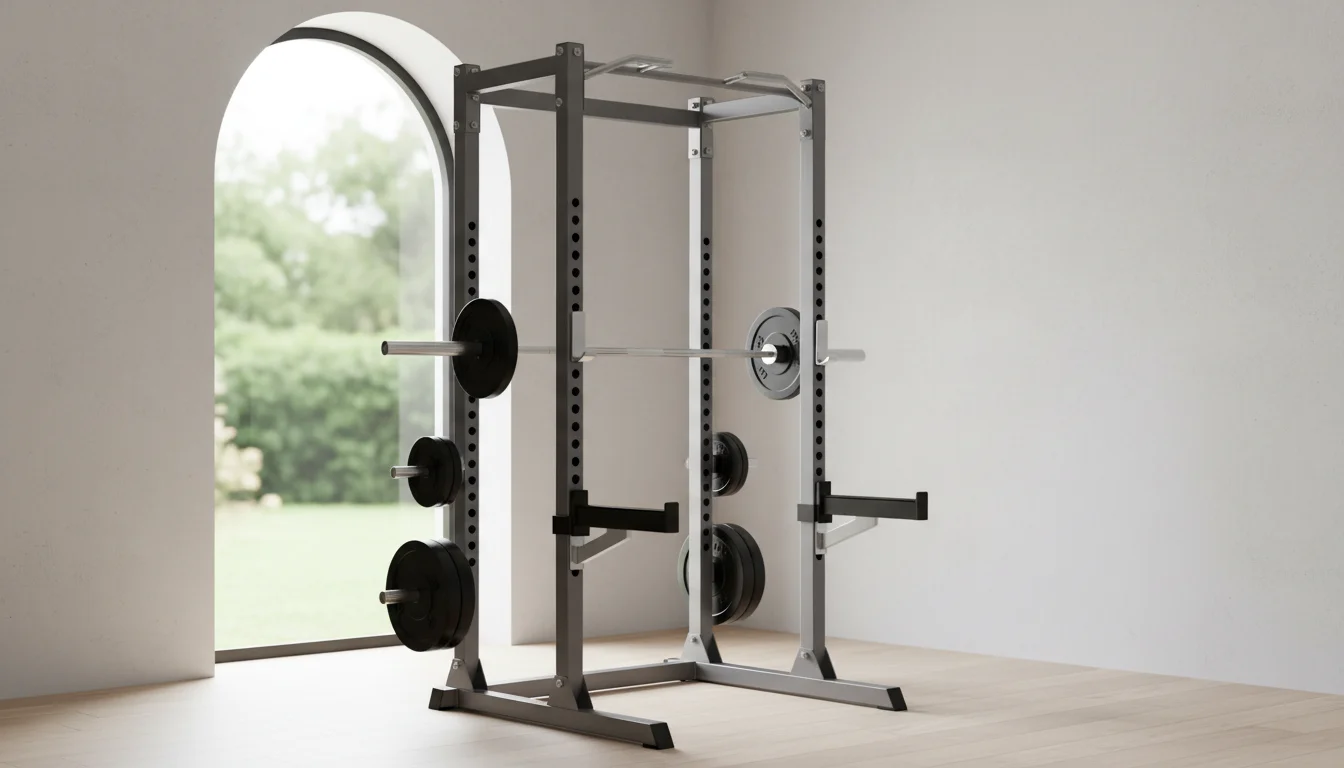
What Is a Power Cage and What Does It Do?
A power cage consists of four vertical uprights connected by a frame, with adjustable J-hooks for racking barbells and horizontal safety bars to catch failed lifts.
The primary function is enabling solo lifters to perform compound movements safely. You set the safety bars at the bottom of your range of motion. If you fail a squat or bench press, the barbell lands on those bars instead of crushing you.
| Feature | Power Cage | Squat Stands | Half Rack |
|---|
| Uprights | 4 posts fully enclosed | 2 separate stands | 2 posts with rear support |
|---|---|---|---|
| Safety System | Full adjustable safety bars | None or minimal | Spotter arms only |
| Stability | Highest | Lowest | Moderate |
| Walk-in Design | Yes | No | Partial |
Squat stands are two separate vertical posts. They're portable but offer minimal safety. Half racks have two front uprights with rear stabilizers and spotter arms. Power cages, also called power racks, provide full enclosure—you lift inside the cage with protection on all sides.
The enclosed design of a power cage means safety bars span the entire lifting area. This matters when you're grinding through a heavy squat and your legs give out at the bottom.
Who Actually Needs a Power Cage?
Solo lifters training heavy compound movements without spotters need a power cage. The safety system transforms risky lifts into controlled failures.
Consider your situation honestly. Do you squat heavy? Do you bench press alone? Do you plan to add weight to the bar over months and years? If you answered yes to any of these, a power rack becomes essential equipment rather than an optional accessory.
You need a power cage if:- You train alone and perform squats, bench press, or overhead press
- You're committed to progressive overload and adding weight consistently
- Your working sets approach or exceed bodyweight on compound lifts
- You want to attempt maximal efforts without a training partner
- You're a complete beginner using lighter weights
- You primarily use dumbbells or machines
- You have a reliable training partner for every session
- Your budget or space makes it impossible right now
Is a power rack necessary for beginners? Not immediately. A new lifter squatting 95 pounds faces different risks than someone squatting 315. But strength builds faster than most people expect. Many lifters outgrow their equipment within a year.
A power rack makes sense for beginners as a long-term investment. You'll grow into it. The alternative is buying squat stands now and replacing them with a cage later when the weights get serious.
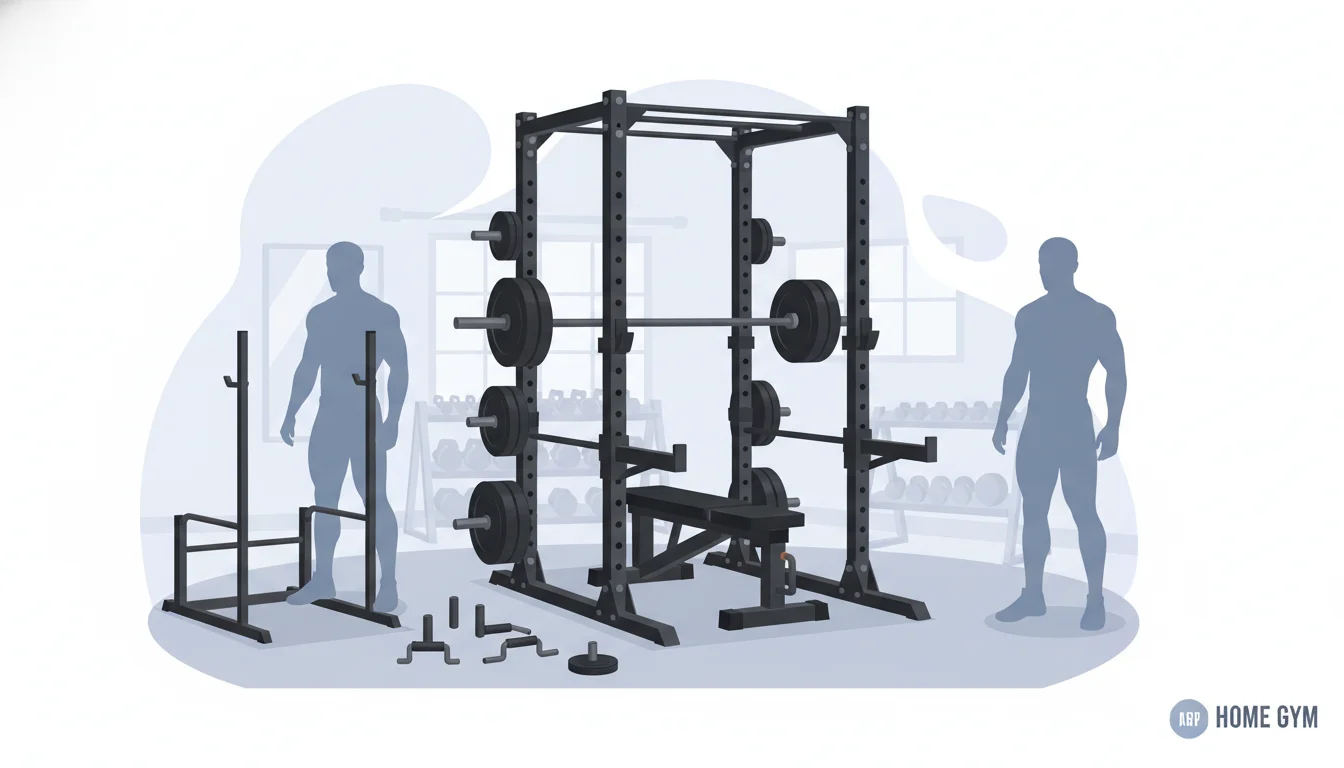
Power Cage vs Squat Stands vs Half Rack: Which Is Right for You?
Your choice depends on budget, available space, and how heavy you plan to lift. Each option serves different situations.
| Feature | Squat Stands | Half Rack | Full Power Cage |
|---|
| Price Range | $100-250 | $300-600 | $400-1,200+ |
|---|---|---|---|
| Footprint | 4x2 feet | 4x4 feet | 4x4 feet |
| Safety Rating | Low | Moderate | Maximum |
| Exercise Variety | Basic squats, press | Squats, bench, pull-ups | 30+ exercises with attachments |
| Weight Capacity | 300-500 lbs | 500-800 lbs | 700-1,000+ lbs |
| Best For | Tight budgets, light lifting | Space-conscious intermediates | Serious lifters, solo training |
Squat stands cost the least and occupy the smallest footprint. They work for light to moderate weights when you're confident you won't fail reps. The tradeoff is minimal safety.
Half racks offer middle ground. Spotter arms provide some protection, and the smaller footprint fits tighter spaces. Mikolo notes that half racks suit intermediate lifters with budget and space constraints.
The power rack versus squat rack decision comes down to one question: how heavy will you go? If the answer is "as heavy as possible," the full cage wins. Alternatives work only when you accept their limitations.
Start with squat stands if budget forces the choice. Upgrade when your lifts demand better safety.
Space Requirements and Setup Considerations
Plan for a minimum 8x8 feet total workout area. The cage itself occupies roughly 4x4 feet, but you need clearance on all sides for loading plates and performing movements.
| Measurement | Requirement |
|---|
| Cage Footprint | 4 ft x 4 ft (50x50 inches typical) |
|---|---|
| Minimum Workout Area | 8 ft x 8 ft |
| Side Clearance | 24 inches minimum each side |
| Standard Ceiling Height | 8-9 feet |
| Short Cage Ceiling Height | 7 feet minimum |
| Barbell Length Clearance | 7-8 feet wall-to-wall |
Power cage dimensions vary by model. Standard racks stand 7-8 feet tall. Short racks exist for basements with low ceilings, typically 72-82 inches. Measure your ceiling before ordering—you need about 2 feet of clearance above the rack for pull-ups and overhead pressing.
MajorFitness recommends rubber mats or gym flooring under your power rack. This protects floors, reduces noise, and prevents the cage from shifting during heavy lifts. Placement considerations by room type:- Garage: The most common choice. Durable floors, ample space, and easy ventilation. Watch for temperature extremes.
- Basement: Works if ceiling height exceeds 7 feet. Offers good noise isolation. Check for moisture issues.
- Spare room: Requires careful measurement. Protect the flooring. Consider neighbors below if you're in an apartment.
Bolt-down racks offer maximum stability. Freestanding models work too, but add plate storage to the base for extra weight.
Cost Analysis: Is a Power Rack Worth the Investment?
A quality power rack costs $400-800 for most home gym owners. Budget options exist at $200-400. Premium cages with accessories run $800-2,000 or more.
| Category | Price Range | What You Get | Lifespan |
|---|
| Budget | $200-400 | Basic frame, 500 lb capacity, minimal attachments | 5-10 years |
|---|---|---|---|
| Mid-Range | $400-800 | 1,000 lb capacity, included pull-up bar, better steel | 15-20 years |
| Premium | $800-2,000+ | Commercial grade, Westside hole spacing, attachment ecosystem | 20+ years |
Compare the cost of a power rack to a gym membership. A $50/month gym membership costs $600/year or $1,800 over three years. A mid-range cage pays for itself in under two years and lasts decades.
Total home gym setup costs:- Power cage: $400-800
- Olympic barbell: $150-300
- Weight plates (300 lbs): $300-600
- Rubber flooring: $100-200
- Bench: $150-400
- Total: $1,100-2,300
Is a power rack worth it? For someone training 3-4 times weekly with heavy compound lifts, absolutely. The investment returns value through safety, convenience, and eliminated gym commutes.
Budget alternatives for those not ready: start with squat stands ($150) or a basic half rack ($300). Upgrade when funds allow. Used equipment markets offer significant savings on quality racks.
Exercises You Can Do With a Power Cage
A power cage transforms into a complete gym with the right programming. The basic frame supports all major compound lifts, and attachments expand your possibilities further.
Core barbell movements:- Back squats and front squats
- Bench press (flat, incline, decline)
- Overhead press
- Barbell rows from pins
- Rack pulls and deadlifts
- Pin presses for lockout work
- Pull-ups and chin-ups on the integrated bar
- Dips with attachment bars
- Band-resisted movements using the frame
- Inverted rows
- Dip station for chest and triceps
- Cable pulley system for lat pulldowns, tricep pushdowns, and curls
- Landmine attachment for rows, presses, and rotational work
- Plate storage pegs
- Monolift attachments for competition-style squat walkouts
Power cage exercises cover whole-body training from one station. The benefits multiply with each attachment. A beginner needs only the basic frame, while an advanced lifter can add components over time.
One cage, one barbell, and plates provide everything needed for serious strength development. That's the practical appeal.
FAQ
Can I build a home gym without a power cage?
Yes, using dumbbells, kettlebells, and resistance bands. A power cage becomes necessary when you want heavy barbell training with safety. Lighter training styles work fine without one.
What ceiling height do I need for a power cage?
Standard cages need 8-9 foot ceilings. Short cages fit 7-foot ceilings. Add 12-24 inches above the rack for pull-ups and overhead movements. Measure before purchasing.
Should I bolt my power cage to the floor?
Bolting provides maximum stability for heavy lifts. Freestanding setups work if you add weight to the base using plate storage. Renters often use heavy sandbags or plate-loaded storage instead of drilling.
How long does a power cage last?
Quality steel cages last 15-25 years with normal use. Budget models show wear sooner. A mid-range cage purchased today will likely outlast your interest in lifting.
Can I bench press safely in a power cage without a spotter?
Yes. Set the safety bars just below your chest at the bottom of the movement. If you fail, lower the bar to your chest and slide out, leaving the barbell on the safeties. Practice this at light weight first.
What's the weight limit I should look for in a power cage?
Home lifters should target 700-1,000 lb capacity minimum. This sounds excessive, but it indicates build quality. A cage rated for 1,000 lbs handles dynamic forces from dropping weight much better than one rated for 500 lbs.
Is a folding power rack worth considering for small spaces?
Folding racks save floor space when not in use. They suit garages that double as parking. The tradeoff is slightly reduced stability and the hassle of setup and teardown. Dedicated lifters prefer permanent setups.
What brand power cages offer the best value?
Titan Fitness, Rep Fitness, and Rogue Fitness dominate home gym markets. Titan offers budget-friendly options. Rep provides mid-range value. Rogue commands premium prices with lifetime durability. Match your budget to the appropriate tier.