Which Way to Squat on Angled Smith Machine: Quad vs Glute Focus Explained
Which Way to Squat on Angled Smith Machine: Quad vs Glute Focus Explained
The angled Smith machine forces your body into different positions based on which direction you face. The bar's 7-12 degree tilt creates distinct loading patterns that shift emphasis between your quadriceps and posterior chain. This guide breaks down both facing directions, proper setup for each, and how to program them for your specific training goals.
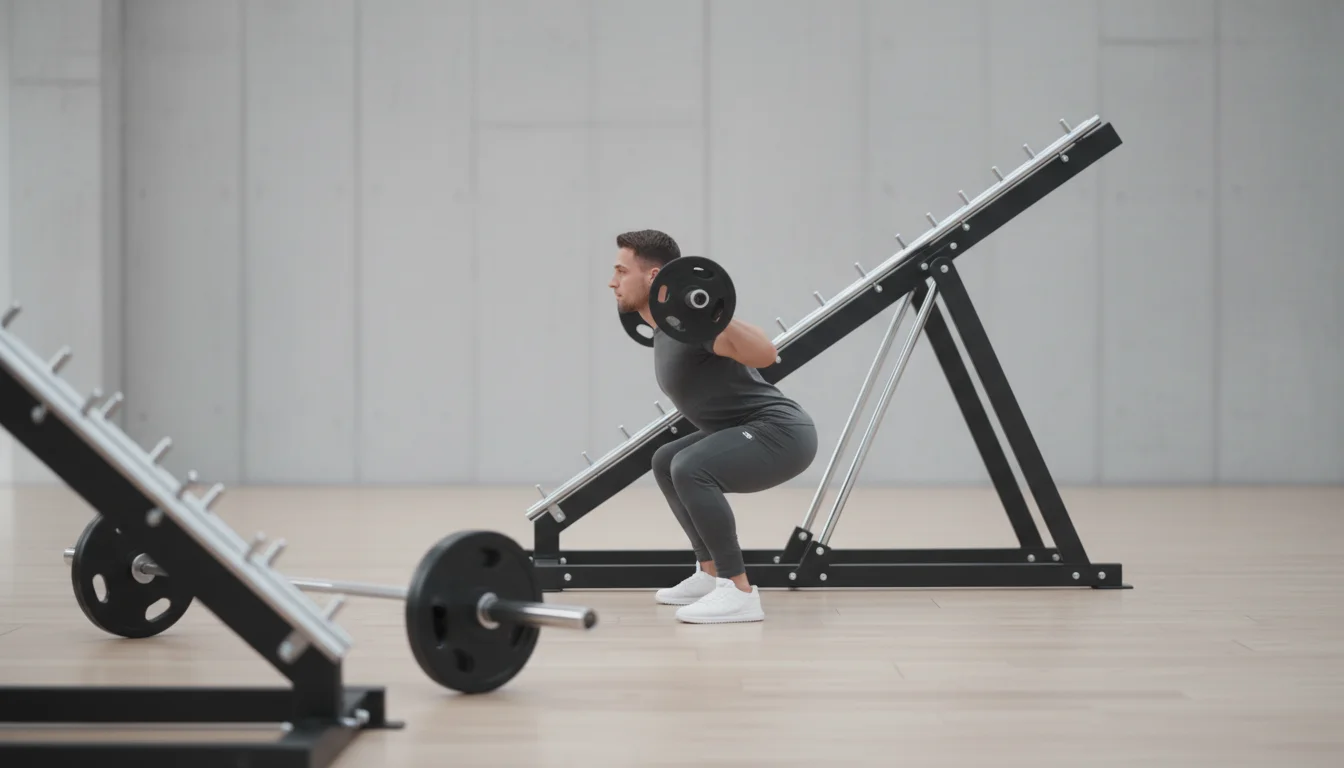
Understanding the Angled Smith Machine Design
The bar travels along a fixed track tilted 7-12 degrees from vertical, creating a predetermined path that differs significantly from free-weight squats.
| Feature | Angled Smith Machine | Vertical Smith Machine | Free-Weight Barbell |
|---|
| Bar Path | 7-12° backward tilt | Straight vertical | Lifter-dependent |
|---|---|---|---|
| Stabilization Required | Minimal | Minimal | High |
| Natural Movement Pattern | Better hip/knee tracking | Less natural | Most natural |
| Gym Availability | Most common | Less common | Universal |
This angled design accommodates a more natural bar path that matches your body's squatting mechanics. The tilt increases range of motion and reduces joint stress compared to vertical machines. Your facing direction determines whether the bar assists quad-dominant knee flexion or hip-dominant posterior chain loading.
Most commercial gyms stock angled machines specifically because they allow safer guided squats. The reduced stabilization demand makes form easier to maintain, especially under heavier loads. [Live Lean TV] demonstrates how this angle creates biomechanical advantages over vertical alternatives.
Facing Toward the Machine: Quad-Focused Squats
Position yourself with your face toward the machine frame, placing the angled bar so it tilts toward your body during the lift.
This orientation keeps your torso upright throughout the movement. The bar path shifts weight forward onto your knees, creating a knee-dominant squat pattern that targets the quadriceps intensely.
Setup Steps:- Place feet slightly forward of the bar line, about shoulder-width apart
- Unrack by twisting the bar backward to disengage the safety hooks
- Keep your chest lifted and eyes forward
- Lower until thighs reach parallel or slightly below
- Drive through the entire foot to stand
- Knees track directly over toes throughout the descent
- Maintain an upright torso position
- Control the eccentric phase for 2-3 seconds
- Avoid letting heels rise off the platform
The fixed path eliminates the need to balance the bar, letting you focus entirely on quad contraction. This direction works best when treating the Smith machine as a leg extension alternative rather than a traditional squat replacement.
Facing Away from the Machine: Glute-Focused Squats
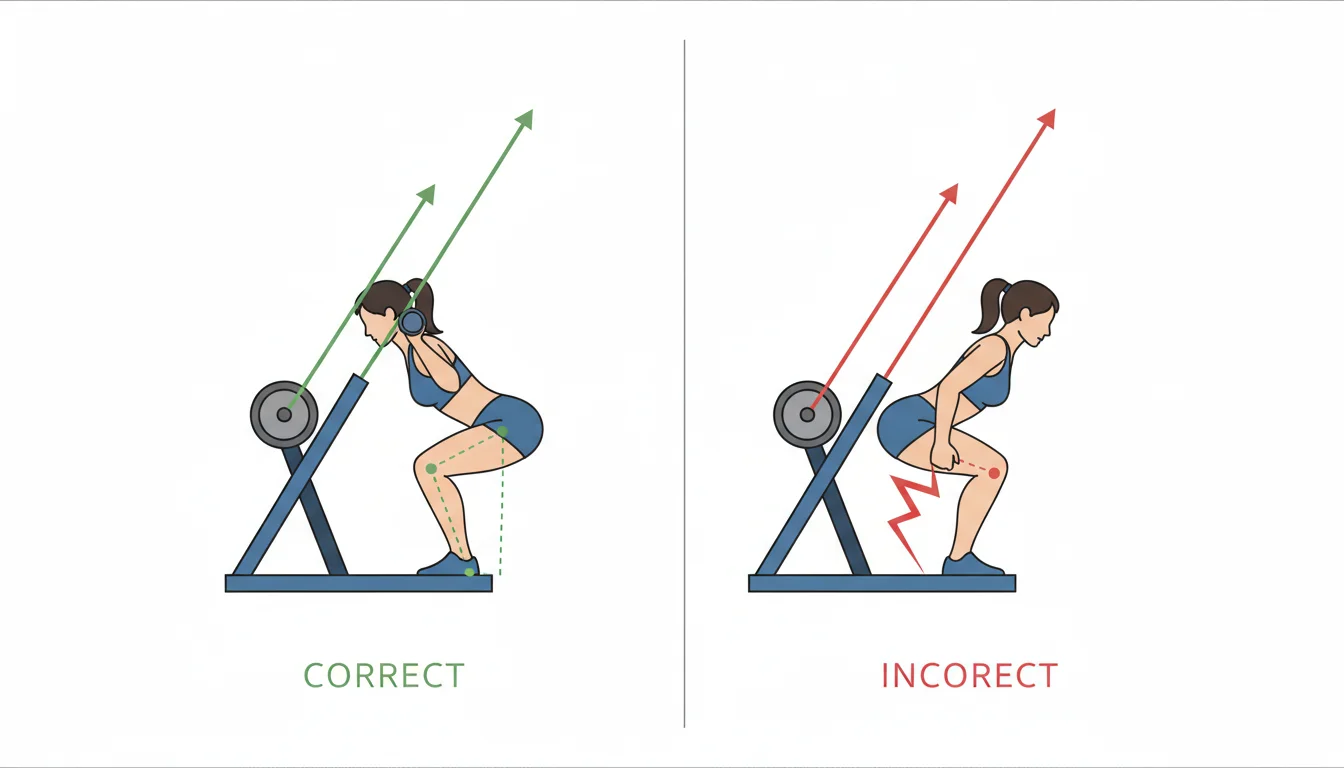
Turn around so your back faces the machine frame, positioning the bar to angle behind you during the descent.
This setup encourages a natural hip hinge where you sit back into the squat rather than dropping straight down. The bar path loads your hips instead of your knees, targeting the glutes and hamstrings with greater intensity.
Setup Instructions:- Walk feet further forward than the quad-focused version
- Use a slightly wider stance to increase hip involvement
- Allow a natural forward torso lean as you descend
- Push hips back first before bending knees
- Drive through heels to return to standing
- Initiate the movement by pushing hips backward
- Maintain a neutral spine throughout
- Feel the stretch in your glutes at the bottom position
- Squeeze glutes hard at lockout
According to [Renaissance Fitness], facing away "sets you up much better to perform glute and hamstring work because your hip is the controlling joint." The forward foot placement accommodates the bar's backward travel path. The glute pump from this variation hits differently than traditional squats.
Muscle Activation: Comparing Both Directions
Your facing direction determines whether knee flexion or hip flexion dominates the movement pattern.
| Factor | Facing Toward (Quads) | Facing Away (Glutes) |
|---|
| Primary Muscles | Quadriceps | Glutes, Hamstrings |
|---|---|---|
| Joint Emphasis | Knee flexion | Hip flexion |
| Torso Position | Upright | Forward lean |
| Stretch Intensity | Moderate | Greater |
| Movement Pattern | Knee-dominant | Hip-dominant |
Neither direction is wrong. The "correct" way depends entirely on what you're training that day. Knee-dominant squats with upright torsos increase quadriceps loading, while hip-dominant squats with forward lean shift forces toward the posterior chain.
For balanced leg development, incorporate both variations across your training week. Alternating between directions every session produces more complete muscle engagement than sticking with one orientation. [Mikolo Gym] confirms this approach maximizes the machine's versatility.
Common Mistakes and How to Avoid Them
These errors limit muscle activation and increase injury risk regardless of facing direction.
- Feet directly under the bar: Move feet forward to accommodate the angled bar path. Direct placement forces unnatural joint angles.
- Cutting depth short: Partial reps reduce muscle activation. Lower until thighs reach parallel or below based on your mobility.
- Knees caving inward: Push knees out over toes throughout the movement. Valgus collapse stresses knee ligaments.
- Rounding lower back: Maintain a neutral spine, especially when facing away. The forward lean should come from hip hinge, not spinal flexion.
- Loading too heavy too fast: Master the movement pattern before adding plates. The fixed bar path doesn't mean poor form won't cause injury.
Fair warning: the facing-away position tempts people to round their backs at the bottom. If you feel your lumbar spine flexing, reduce depth until hip mobility improves.
Programming Recommendations by Training Goal
Match your facing direction and rep scheme to your specific muscle-building objectives.
For Quad Development:- Face toward the machine
- 3-4 sets of 8-12 reps
- Controlled 3-second eccentric
- Use as a primary quad accessory after compound movements
- Face away from the machine
- 3-4 sets of 10-15 reps
- Pause 1 second at bottom stretch
- Pair with hip thrusts for complete posterior chain training
- Alternate directions each leg day
- Or perform both in the same session: quads first, glutes second
- 2-3 sets of each variation
Smith machine squats work best as accessory movements alongside free-weight compounds. The guided path builds muscle effectively but doesn't develop the stabilizer strength you get from barbell squats.
FAQ
Does foot width change muscle activation on the angled Smith machine?
Wider stances increase hip abductor involvement and allow deeper hip flexion. Narrower stances emphasize quad sweep. Experiment with stance width while maintaining proper knee tracking over toes.
Is the angled Smith machine safer than free-weight squats?
The fixed bar path reduces balance requirements and includes safety catches at multiple heights. This makes it easier to train near failure without a spotter. Injury risk decreases when form stays consistent.
How deep should I squat on the angled Smith machine?
Aim for thighs parallel to the floor or slightly below based on your hip mobility. Deeper squats increase muscle activation but require adequate flexibility. Stop before your lower back rounds.
Should beginners face toward or away from the machine?
Beginners benefit from facing toward the machine first. The upright torso position is easier to maintain, and the movement feels more natural. Progress to facing away once you've mastered basic squat mechanics.
How does which way to squat on angled Smith machine affect knee stress?
Facing toward creates more knee flexion and forward knee travel. Facing away reduces knee stress by shifting load to the hips. Those with knee issues often tolerate the glute-focused direction better.
Can I build significant muscle using only Smith machine squats?
Smith machines effectively build quadriceps and glute size when programmed correctly. The fixed path allows safe progressive overload. Combine with free-weight movements for complete strength development.
How often should I include Smith machine squats in my routine?
Two sessions per week works well for most lifters. Alternate facing directions between sessions or include both variations in the same workout with reduced volume for each.