Smith Machine Without Spotter: The Complete Guide to Safe Solo Training in 2025
Smith Machine Without Spotter: The Complete Guide to Safe Solo Training in 2025
The smith machine without spotter setup uses adjustable safety catches and a guided bar path to prevent dangerous bar drops during solo lifts. Studies show that proper safety pin placement reduces lifting injuries by creating a fail-safe at predetermined heights. This guide covers safety features, correct pin setup, and exercises for confident solo training.
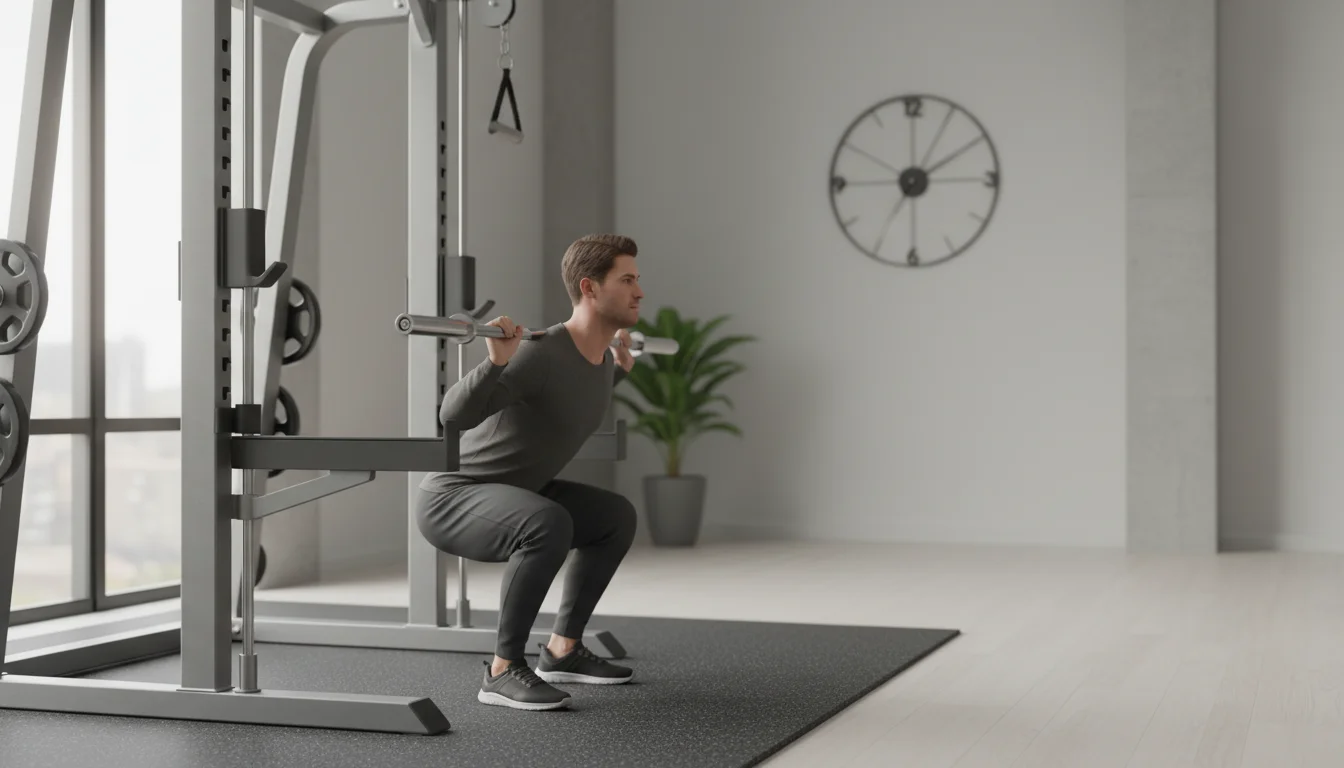
Why the Smith Machine Is Ideal for Training Without a Spotter
The fixed vertical rails and twist-lock hooks eliminate two major solo lifting risks: losing balance and getting trapped under weight.
Built-in protection makes the difference:- Adjustable safety catches stop the bar at any height you choose
- The guided bar path removes stabilization demands, letting you focus on pushing weight
- Rotating hooks let you rack the bar instantly with a simple wrist twist
- Safety stops create the confidence to attempt heavier lifts without hesitation
The psychological factor matters more than most lifters realize. Knowing the catches will save you if a rep fails changes how you approach each set. You push harder. You train closer to true failure.
Powertec integrates spotter rails with their Roller Smith Machine specifically for this purpose. The combination of mechanical safety and structural support lets you train at near-maximum intensity alone.Understanding Smith Machine Safety Features
Three mechanisms work together to protect solo lifters: adjustable catches, safety pins, and rotating hooks that enable instant bailout.
| Safety Feature | Function | Best For |
|---|
| Adjustable Safety Catches | Set along vertical rails to stop bar descent | Bench press, overhead press |
|---|---|---|
| Safety Pins/Stops | Insert into frame slots at fixed heights | Squats, heavy compound lifts |
| Rotating Hooks | Twist wrist to lock bar onto rails instantly | Quick reracking during failure |
| Spotter Rails | Built-in arms on some models for added protection | Rows, lunges, angled movements |
Different Smith machine models offer varying safety systems. Some feature fixed safety arms, while others use adjustable blocks. Premium models like the Powertec Roller combine multiple systems for redundant protection.
Gym Mikolo emphasizes testing these features before every session. A safety catch that worked last week needs verification today.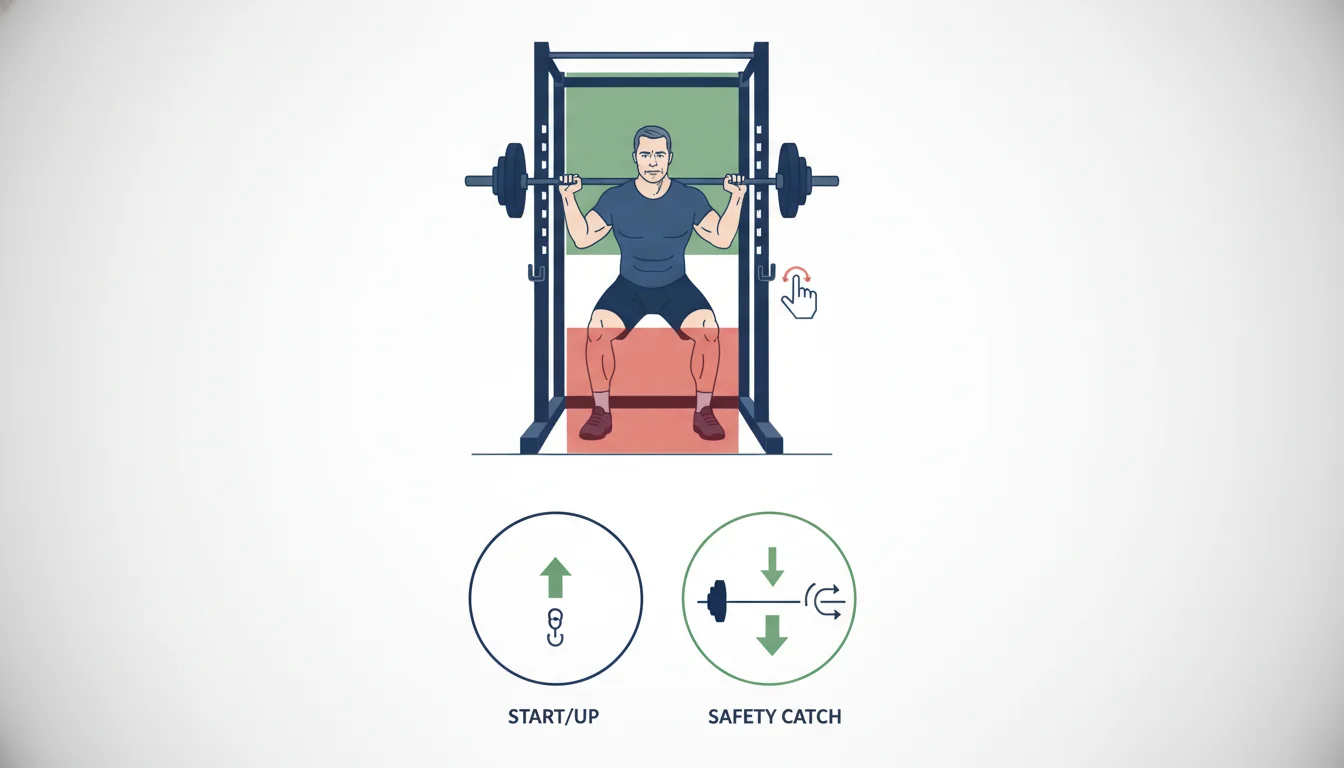
How to Set Up Safety Pins Correctly for Solo Lifting
Position pins at the exact height where you need rescue—not where you think looks right.
Step-by-step setup process:1. Locate the adjustment holes on both vertical rails
2. Set pins at identical heights on each side
3. For squats: place pins 1-2 inches below your deepest safe depth
4. For bench press: position pins just above chest level when lying flat
5. Test with an empty bar through your full range of motion
6. Load weight only after confirming the catches engage properly
The testing step prevents injuries. Lower the empty bar slowly until it contacts the safety pins. Confirm they hold. Then rehearse "failing" a rep intentionally so your body knows the escape route.
Common setup mistakes:- Pins set too low, catching you only after injury occurs
- Uneven heights creating bar tilt during catches
- Skipping the empty bar test before loading plates
- Forgetting to readjust when switching exercises
[Major Fitness] recommends checking pin security after every height adjustment. Loose pins under load create dangerous situations.
Best Smith Machine Exercises for Solo Training
Compound pressing movements benefit most from Smith machine safety features because they position you directly under the bar.
Bench Press Setup:Position the bench so the bar path aligns with your mid-chest. Set catches 1 inch above your chest when lying flat. This height catches failed reps before the bar crushes you while still allowing full range of motion on successful lifts.
Squat Configuration:Stand with feet slightly forward of the bar path. Set pins at your rock-bottom depth minus one inch. The slight gap lets you complete full reps while providing immediate rescue during failures.
Shoulder Press Technique:Whether seated or standing, position catches at forehead height. Failed overhead presses drop fast, and having catches at face level prevents serious injury.
Rowing Movements:Set pins at hip height for bent-over rows. The bar stays stable in the guided path, letting you focus on back contraction without balance concerns.
| Exercise | Safety Pin Height | Key Tip |
|---|
| Flat Bench Press | 1" above chest | Test lying position before loading |
|---|---|---|
| Squats | 1" below bottom position | Keep slight forward foot placement |
| Shoulder Press | Forehead level when seated | Start lighter than free weight numbers |
| Incline Press | 2" above upper chest | Adjust bench angle first, then pins |
| Lunges | Mid-thigh height | Use lighter weight for balance learning |
Progressive overload without spotters requires patience. Add 5 pounds per session maximum. The safety catches protect you, but respecting your actual strength level prevents needing them in the first place.
Common Mistakes When Using a Smith Machine Alone
Skipping safety pin setup tops the list of dangerous habits among solo lifters.
The most frequent errors:- Loading weight before setting catches (the catches exist for a reason)
- Positioning pins too low for actual protection
- Ego lifting beyond realistic capacity
- Skipping warm-up sets because "the machine is safe"
- Never practicing the bailout procedure
The ego lifting problem deserves attention. Safety catches create false confidence, and lifters attempt weights they have no business touching. The catches save them once. They add more weight. Eventually the catches prevent a serious injury, but the near-miss should have been a warning.
Warm-ups matter more when training solo. No spotter watches your form deteriorate. No training partner notices you look tired. You must self-regulate, and cold muscles make poor decisions.
Practice failing on purpose with light weight. Know exactly how to twist and release. Know exactly where the bar lands. This rehearsal builds the muscle memory you need when a real failure happens fast.
Smith Machine vs. Free Weights for Solo Lifters
The Smith machine wins for heavy pressing movements when no spotter exists. Free weights win for overall strength development.
| Factor | Smith Machine | Power Rack with Safeties |
|---|
| Bailout Speed | Instant wrist twist | Must dump or roll bar |
|---|---|---|
| Balance Required | None | Full stabilization needed |
| Muscle Activation | Primary movers only | Primary plus stabilizers |
| Learning Curve | Low | Moderate to high |
| Strength Transfer | Limited to machine | Transfers to real-world movements |
Use the Smith machine for your heaviest sets when training alone. Use free weights in a power rack for moderate loads where failure is unlikely. This combination builds real strength while maintaining safety margins.
Your experience level determines the ratio. Beginners benefit from more Smith machine work while learning movement patterns. Intermediate lifters shift toward free weights as form solidifies. Advanced lifters use both strategically based on the training day's goals.
The honest assessment: Smith machine strength doesn't fully transfer to free weight strength. The guided path removes the stabilization demands your body needs to develop. But a safe heavy workout beats an injured lifter every time.
FAQ
How much weight should I reduce when switching from spotted to solo lifting?
Drop 10-15% from your spotted maximums when training alone. This margin accounts for the psychological pressure of having no backup. You'll regain that weight within 2-3 weeks as confidence builds with the safety system.
Do safety catches work if the bar is loaded unevenly?
Uneven loading creates dangerous tilting even with catches engaged. The bar contacts one catch before the other, potentially sliding off. Always load plates evenly and double-check before lifting.
How often should I test my safety pin placement?
Test before every exercise change and at the start of every session. Pins loosen over time, and other gym users adjust them between your visits. The 30-second test prevents serious consequences.
Is the Smith machine safe for beginners learning to lift alone?
Yes, beginners benefit significantly from the guided bar path and instant bailout options. The fixed movement pattern teaches basic pressing and squatting mechanics before adding balance demands. Start with empty bar practice.
What exercises should I avoid on the Smith machine without a spotter?
Avoid exercises requiring diagonal bar paths, such as traditional deadlifts. The vertical track forces unnatural movement patterns for these lifts. Stick to squats, presses, rows, and lunges where vertical paths match the exercise mechanics.
How do I know if my gym's Smith machine safety catches are reliable?
Test them with moderate weight before trusting them with heavy loads. Old or poorly maintained machines develop worn catch mechanisms. If the pins feel loose or the hooks don't engage smoothly, report the issue and find another machine.