Smith Machine Without Counterbalance: The Complete Guide for Serious Lifters
Smith Machine Without Counterbalance: The Complete Guide for Serious Lifters
A smith machine without counterbalance features a barbell on guided rails with no mechanism to reduce the bar's weight. The bar typically weighs 15 to 25 pounds, and you lift every ounce of it plus your plates. This guide covers how these machines work, who benefits most, and how to calculate your true lifting weight.
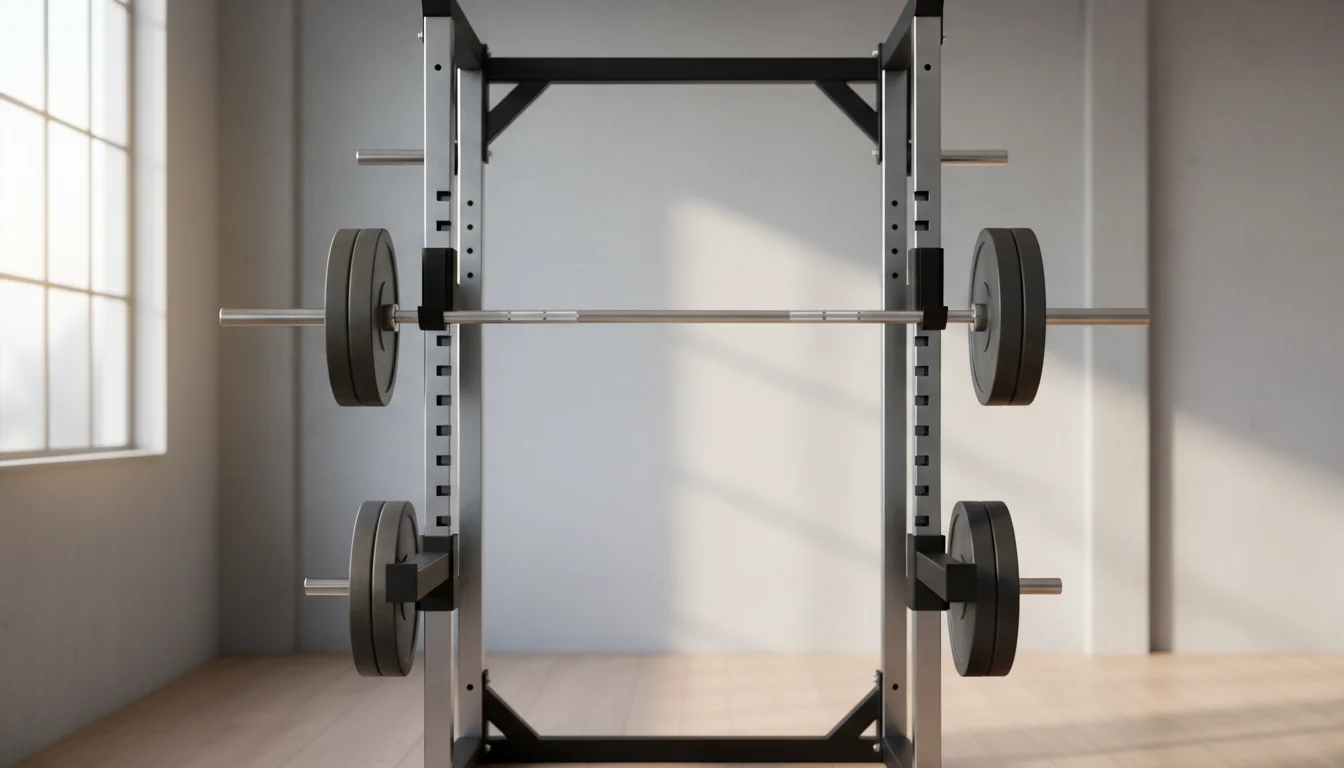
What Is a Smith Machine Without Counterbalance?
This type of machine guides a barbell along vertical steel rails without springs, cables, or weights to offset the load.
| Feature | Non-Counterbalanced | Counterbalanced |
|---|
| Bar Weight Range | 15-25 lbs actual | 6-25 lbs effective |
|---|---|---|
| Weight You Feel | Full bar + plates | Reduced by 10-20 lbs |
| Mechanical Complexity | Simple design | Pulleys/springs required |
| Maintenance Needs | Lower | Higher |
| Cost | Generally lower | Generally higher |
The fixed path provides stability during squats, presses, and rows. You sacrifice stabilizer muscle engagement but gain predictable motion. According to [Vanswe Fitness], counterbalanced machines make a 45 lb bar feel like 15 to 25 lbs through hidden offset systems.
I learned this the hard way. I switched gyms and assumed my squat numbers would transfer. They did not.
How to Calculate the Weight You're Actually Lifting
The math is straightforward: add your bar weight to your plates, and that total is what you lift.
Non-counterbalanced formula:- Total Weight = Bar Weight + Plates Added
- Total Weight = (Bar Weight - Counterbalance Offset) + Plates Added
Most counterbalance systems subtract 10 to 25 pounds from the effective weight. A machine with a 45 lb bar and a 20 lb counterbalance means you start at 25 lbs, not 45. [Major Fitness] confirms this calculation method for accurate tracking.
Here is the practical takeaway: ask your gym staff about the bar weight and counterbalance status. Write it down. Your training log depends on accurate numbers.
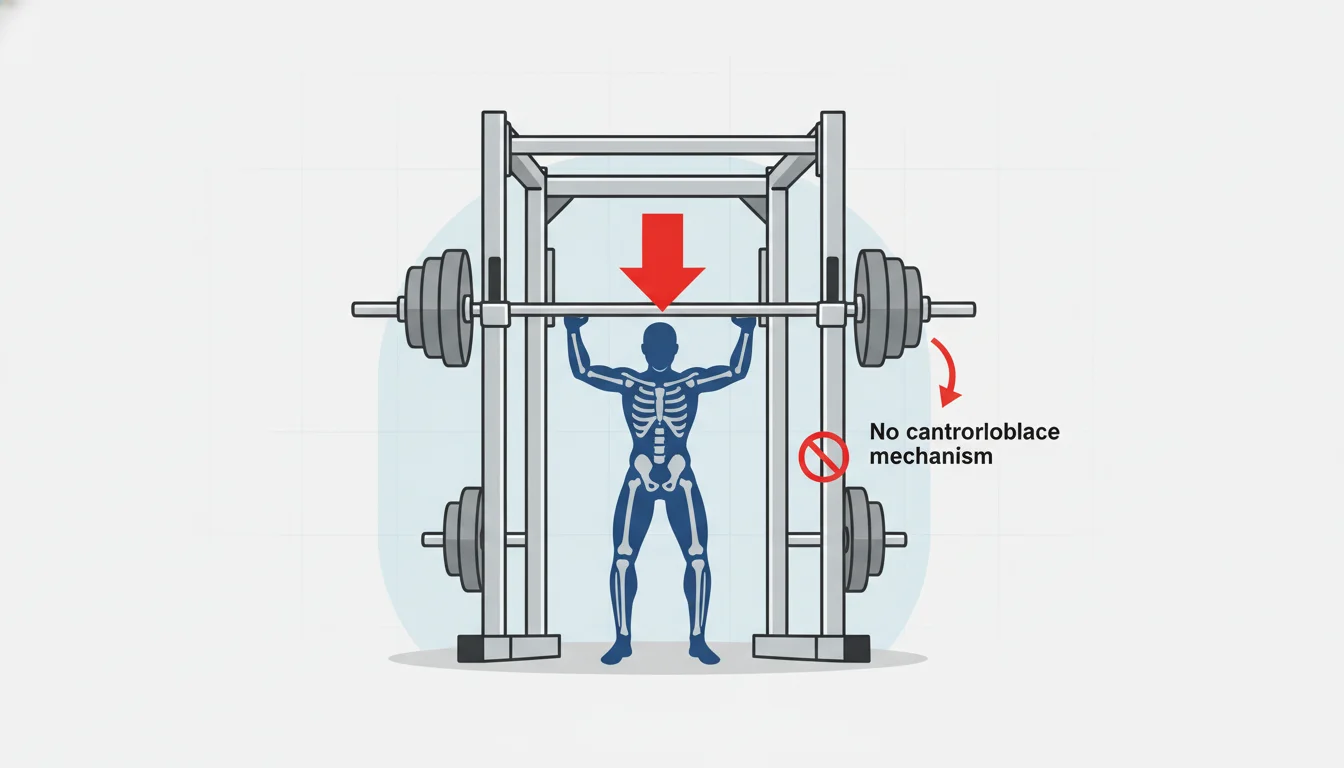
Benefits of Non-Counterbalanced Smith Machines
These machines provide honest feedback about your strength with zero mechanical assistance hiding the true load.
- Accurate progress tracking: The weight on the bar equals the weight you move. No guessing, no conversion math required.
- Better free weight preparation: Resistance patterns closer to barbells mean smoother transitions when you graduate to squat racks.
- Lower cost and maintenance: Fewer moving parts means less can break. Home gym owners appreciate this simplicity.
- Honest strength assessment: No hidden help means no inflated ego. You know exactly what you lift.
- Preferred by experienced lifters: Athletes seeking functional strength choose these machines for realistic training loads.
A PubMed study found that counterbalanced machines reduce force, power, and velocity measurements during maximal efforts. Non-counterbalanced versions preserve accurate performance data.
Knowing your real numbers matters—especially when programming progressive overload or comparing performance across different gyms.
Drawbacks and Limitations to Consider
The heavier starting weight creates genuine challenges for specific populations.
- Beginners struggle with initial load: A 20 to 25 lb bar with no offset forces newer lifters to handle significant weight before adding plates.
- Joint strain during rehabilitation: The fixed vertical path combined with heavier resistance can stress shoulders and wrists unnaturally.
- Steeper learning curve: Practicing form with lighter loads becomes impossible when the bar itself weighs more than comfortable.
- Limited light resistance options: Rehabilitation protocols and endurance training requiring sub-20 lb loads become impractical.
- Stabilizer muscle underengagement: The guided path handles the balancing work your smaller muscles should perform.
According to [GMWD Fitness], these limitations make non-counterbalanced machines less beginner-friendly and riskier for injury recovery scenarios.
Fair warning: if you are recovering from shoulder surgery, this machine type might set you back.
Who Should Use a Non-Counterbalanced Smith Machine?
Intermediate and advanced lifters benefit most from the unassisted resistance these machines provide.
| User Type | Recommendation | Reason |
|---|
| Intermediate lifters | Ideal choice | Accurate tracking supports progression |
|---|---|---|
| Advanced athletes | Preferred | Realistic loads for sport-specific training |
| Home gym owners | Strong option | Lower cost, simpler maintenance |
| Beginners | Start elsewhere | Consider counterbalanced or free weight alternatives |
| Injury rehabilitation | Avoid | Too heavy for controlled recovery work |
| Transitioning to free weights | Excellent | Builds strength patterns that transfer |
Those planning eventual free weight training gain the most advantage. The resistance feels closer to barbell work without the balance demands. Altas Strength notes this transfer benefit for building applicable strength.
Beginners should either find a counterbalanced machine or start with lighter dumbbells until baseline strength develops.
Best Exercises for Non-Counterbalanced Smith Machines
Compound movements work best on these machines because the fixed path supports heavy, controlled lifts.
- Squats: Position feet slightly forward of the bar path. This protects your knees and allows deeper range of motion.
- Bench press: The guided bar lets you push heavier without a spotter. Keep your shoulder blades pinched throughout.
- Shoulder press: Sit with back support. The fixed path prevents the forward drift that strains rotator cuffs.
- Bent-over rows: Stand inside the machine facing the bar. Pull to your lower chest for optimal lat activation.
- Shrugs: Load heavy. The stability allows you to focus on trap contraction without grip limitations.
Safety tip for all exercises: set the safety catches one notch below your lowest point. This machine shines when you use its built-in protection.
The bench press alone makes this machine worth having. Heavy singles without a training partner become safe and manageable.
FAQ
How much does a Smith machine bar weigh without counterbalance?
Most non-counterbalanced Smith machine bars weigh between 15 and 25 pounds. This varies by manufacturer and model. Check your specific machine's specifications or weigh the bar directly for accuracy.
Is a Smith machine without counterbalance better than free weights?
Neither is universally better. Non-counterbalanced Smith machines offer safety and stability for heavy lifting, while free weights engage more stabilizer muscles. Your goals determine which serves you better.
How do I know if my gym's Smith machine has counterbalance?
Lift the empty bar and note the resistance. If it feels nearly weightless or floats up easily, a counterbalance exists. Ask staff or check the manufacturer plate on the frame for specifications.
Can beginners use a non-counterbalanced Smith machine safely?
Beginners face challenges with the heavier starting weight. Starting with bodyweight exercises or lighter dumbbells builds foundation strength first. Graduate to the Smith machine once you can handle 20-plus pounds comfortably.
Why do some gyms prefer counterbalanced Smith machines?
Counterbalanced machines accommodate wider skill levels. The lighter effective weight helps beginners and rehabilitation patients. Commercial gyms serving diverse populations choose versatility over specificity.
Does the fixed bar path cause injuries?
The fixed path itself does not cause injuries when used correctly. Problems arise from forcing unnatural movement patterns or using excessive weight. Position your body to work with the bar path, not against it.
How do I transition from Smith machine to free weight barbell?
Reduce your Smith machine weight by 15 to 20 percent when moving to barbells. The added stability demands mean your muscles work harder at lower weights. Progress gradually over several weeks.