Smith Machine Reverse Lunges for Glutes: Complete Form Guide & Workout Programming
Smith Machine Reverse Lunges for Glutes: Complete Form Guide & Workout Programming
Smith machine reverse lunges target glute muscles with 60%+ activation rates while reducing anterior knee stress compared to forward lunge variations. EMG studies confirm that loaded reverse lunges recruit gluteus maximus fibers more effectively than back squats when performed with proper form. This guide covers setup, execution, variations, and programming strategies for optimal glute development.
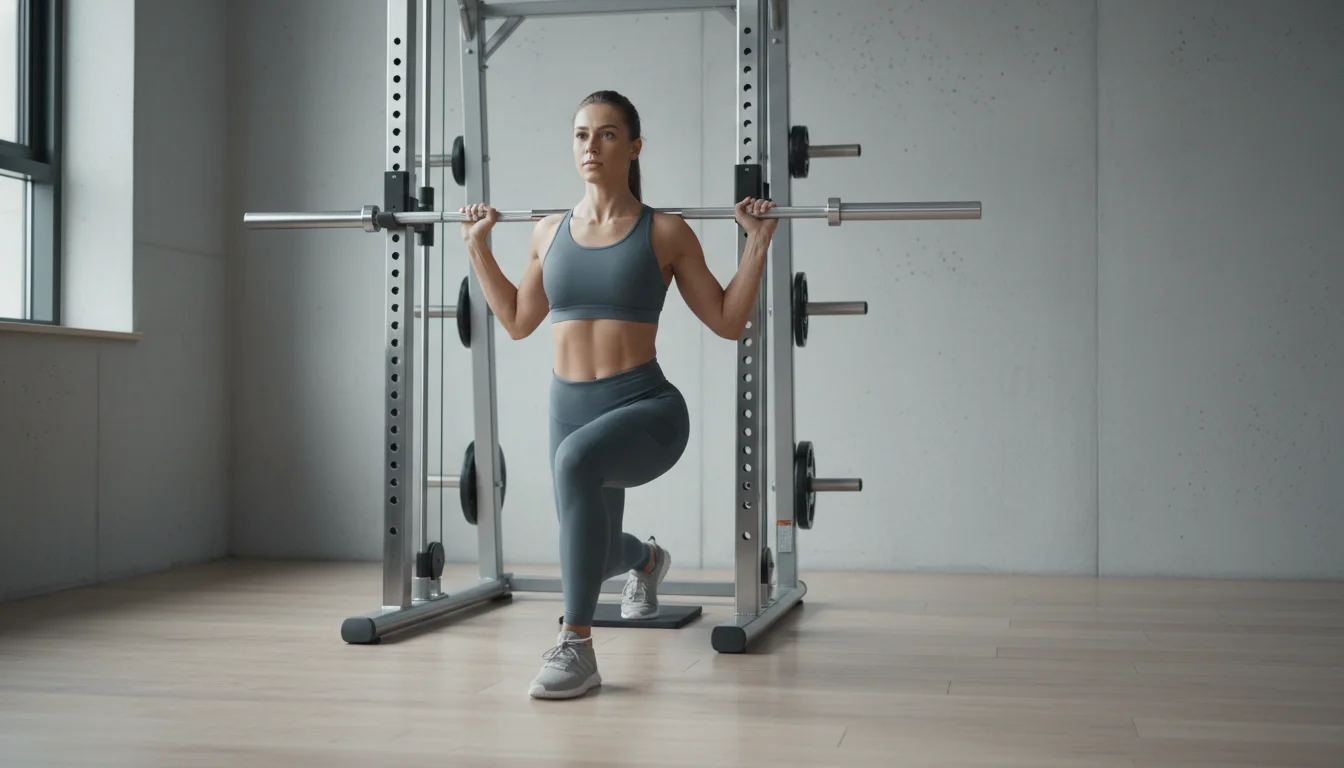
Why Smith Machine Reverse Lunges Are Superior for Glute Development
The fixed bar path shifts your weight posteriorly during descent, increasing gluteus maximus engagement beyond what forward lunges achieve. This mechanical advantage lets you load heavier and push harder.
Smith machine reverse lunges for glutes work so well because stability is built into the equipment. Your brain stops worrying about balance, and your glutes start doing real work.| Factor | Smith Machine Reverse Lunge | Free Weight Reverse Lunge | Forward Lunge |
|---|
| Glute Activation | High (posterior shift) | Moderate | Lower |
|---|---|---|---|
| Knee Stress | Reduced | Moderate | Higher |
| Loading Capacity | Heavy | Moderate | Moderate |
| Balance Demand | Minimal | High | Moderate |
| Progressive Overload | Easy to track | Variable | Variable |
The unilateral movement pattern corrects side-to-side imbalances over time. Each leg works independently, exposing and fixing weaknesses you never knew existed.
Research from NIH shows reverse lunges create significantly less anterior knee stress while maximizing posterior chain engagement. If your knees bark during leg day, this variation deserves your attention.
Step-by-Step Form Guide: How to Do Smith Machine Reverse Lunges
Position the bar at shoulder height, unrack with feet hip-width apart, then step one foot backward while lowering until your rear knee nearly touches the floor. Drive through your front heel to return. The entire movement takes about four seconds when performed correctly.
Equipment Setup:- Set the bar at upper chest or shoulder height
- Stand centered under the bar
- Position feet hip-width apart before unracking
- Unrack and step forward 6-8 inches
- The bar should track over your mid-foot during the lunge
- Keep shoulders back and core braced
- Step back 2-3 feet with one leg
- Lower with control until your rear knee hovers one inch from the floor
- Keep your front shin vertical throughout
- Lean your torso forward 10-20 degrees
- Drive through your front heel explosively
- Squeeze your glutes hard at the top
- Inhale during the descent
- Hold briefly at the bottom
- Exhale forcefully while driving up
- 2-3 seconds lowering (eccentric)
- 1 second pause at bottom
- 1 second explosive return (concentric)
That slight forward lean changes everything. Keep your torso perfectly upright and your quads steal the show. Tip forward slightly and your glutes take over. I learned this the hard way after months of quad-dominant lunging.
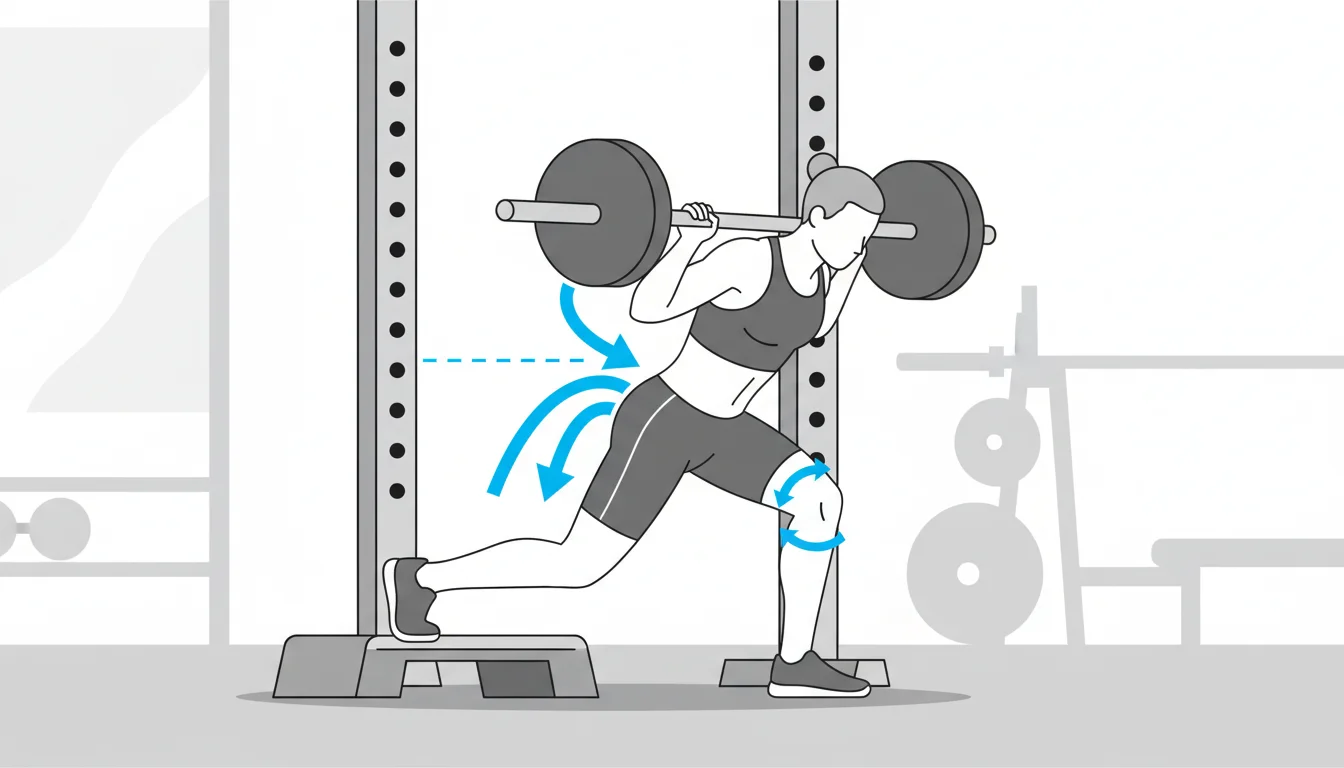
Front Foot Elevated Variation for Maximum Glute Stretch
Placing your front foot on a 2-4 inch platform increases hip flexion range, creating a deeper glute stretch at the bottom position that recruits more muscle fibers. This variation transforms an already effective exercise into a glute-building machine.
Setup Requirements:- Use a weight plate, aerobic step, or small platform
- Ensure the surface is stable and non-slip
- Position the platform centered under the bar path
- Greater hip flexion lengthens the glute through a larger range
- A deeper stretch triggers increased fiber recruitment
- Enhanced hip extension on the way up intensifies the contraction
- Reduced joint stress compared to simply adding more weight
1. Master standard smith machine reverse lunges first
2. Add elevation with bodyweight only
3. Practice for 2-3 sessions before loading
4. Add weight in 5-10 pound increments
This variation saved my training when hip mobility issues made standard lunges uncomfortable. The elevation actually made the movement feel better while working the glutes harder. Bodybuilding.com recommends this approach for anyone struggling with hip flexibility.
Common Mistakes and How to Fix Them
Most lifters stand too far forward under the bar, keep their torso upright, and push off the back foot instead of driving through the front heel. These errors shift work away from the glutes and onto the quads and lower back.
| Mistake | Problem | Fix |
|---|
| Standing too far forward | Knee travels past toes, joint stress increases | Step forward after unracking so the bar tracks over mid-foot |
|---|---|---|
| Upright torso | Quad-dominant, glutes underworked | Lean forward 10-20 degrees from hips |
| Pushing off back foot | Reduces glute activation | Cue "drive through front heel" |
| Knee caving inward | Glute medius disengaged, injury risk | Push knee out over pinky toe |
| Using momentum | Reduced time under tension | Slow descent to 2-3 seconds |
- Can you wiggle your back toes at the bottom? Good—weight is on your front leg.
- Does your front heel stay planted? Good—you're driving correctly.
- Do you feel it in your glutes? Good—torso lean is right.
Fair warning: fixing the torso lean feels awkward at first. Your instincts say "stand tall." Override them. That slight hip hinge makes the difference between building glutes and building quads. REP Fitness confirms that proper hip mechanics are essential for glute targeting.
Programming Smith Machine Reverse Lunges Into Your Workout
Perform 3-4 sets of 8-12 reps per leg for hypertrophy, placing the exercise after heavy compounds like squats or hip thrusts but before isolation work. Include reverse lunges 1-2 times weekly within your training split.
Rep Range Guidelines:- Hypertrophy: 8-12 reps per leg
- Strength: 6-8 reps per leg with heavier load
- Endurance: 15-20 reps per leg with lighter load
| Order | Exercise | Sets x Reps | Rest |
|---|
| 1 | Barbell Back Squat | 4 x 6-8 | 3 min |
|---|---|---|---|
| 2 | Romanian Deadlift | 3 x 8-10 | 2 min |
| 3 | Smith Machine Reverse Lunge | 3 x 10-12 per leg | 90 sec |
| 4 | Hip Thrust | 3 x 12-15 | 90 sec |
| 5 | Cable Kickback | 2 x 15-20 per leg | 60 sec |
- Weeks 1-2: Master form at moderate weight
- Weeks 3-4: Add 2-3 reps per set
- Weeks 5-6: Increase weight by 5-10 pounds, return to original reps
- Repeat cycle
This exercise works best in the middle of your workout. Too early and you're too fresh for the stability benefits to matter. Too late and fatigue compromises form. That sweet spot after heavy compounds hits different.
Preventing Knee Pain and Staying Injury-Free
Proper warm-up, correct foot positioning, and knowing when to stop separate productive training from injury. Five minutes of preparation saves weeks of recovery.
Warm-Up Protocol:- 2 minutes: Light cardio (bike or walking)
- 1 minute: Hip circles (10 each direction per leg)
- 1 minute: Bodyweight reverse lunges (5 per leg)
- 1 minute: Glute bridges (10 reps with 2-second hold)
- Knee sensitivity: Take a shorter step back
- Hip tightness: Widen your stance slightly
- Ankle mobility issues: Elevate the front foot
- Sharp pain in knee or hip
- Clicking or popping sounds
- Instability or giving-way sensation
- Pain that increases with each rep
- Allow 48-72 hours between sessions targeting the same muscles
- Foam roll glutes and hip flexors post-workout
- Address mobility restrictions before adding load
Trust me on this one. I ignored mild knee discomfort for three weeks and ended up taking a month off. The warm-up protocol from Endomondo became non-negotiable after that experience.
FAQ
How much weight should beginners use for smith machine reverse lunges?
Start with just the bar (typically 15-20 pounds) for 2-3 sessions to master form. Add 5-10 pounds per week once you can complete 3 sets of 12 reps with perfect technique. Rushing weight progression causes form breakdown and reduces glute activation.
Are smith machine reverse lunges better than Bulgarian split squats for glutes?
Both exercises effectively target glutes through unilateral loading. Smith machine reverse lunges offer more stability and easier progressive overload, while Bulgarian split squats demand more balance and hip flexor flexibility. Choose based on your equipment access and mobility limitations.
How deep should I go during smith machine reverse lunges?
Lower until your rear knee hovers 1-2 inches from the floor. This depth maximizes glute stretch without causing knee contact with hard surfaces. Stopping higher reduces range of motion and glute activation, while going lower risks knee impact.
Can I do smith machine reverse lunges every leg day?
Include them 1-2 times per week with 48-72 hours between sessions. More frequent training prevents adequate recovery and limits muscle growth. Alternate with other glute exercises like hip thrusts or Romanian deadlifts for complete development.
Why do I feel smith machine reverse lunges more in my quads than glutes?
Your torso is probably too upright. Lean forward 10-20 degrees from your hips to shift emphasis to the posterior chain. Also ensure you're driving through your front heel rather than pushing off your back foot. These two corrections immediately change muscle recruitment patterns.
Should I alternate legs or complete all reps on one side first?
Complete all reps on one leg before switching. This approach maintains consistent time under tension and prevents the working leg from recovering between reps. Alternating legs turns the exercise into more of a cardio challenge than a muscle builder.
What shoes work best for smith machine reverse lunges?
Flat, stable shoes like Converse or dedicated lifting shoes provide the best foundation. Running shoes with cushioned heels create instability and reduce force transfer. Barefoot training works for some lifters, but check your gym's footwear policy first.