Smith Machine in Your Apartment: The Complete 2025 Guide to Setup, Safety, and Smart Training
Smith Machine in Your Apartment: The Complete 2025 Guide to Setup, Safety, and Smart Training
A smith machine in apartment settings provides guided bar path training without needing a spotter. The global smith machine market grows at 5.8% annually through 2032, driven largely by home fitness demand. This guide covers space requirements, floor protection, noise control, and landlord negotiations for apartment dwellers.
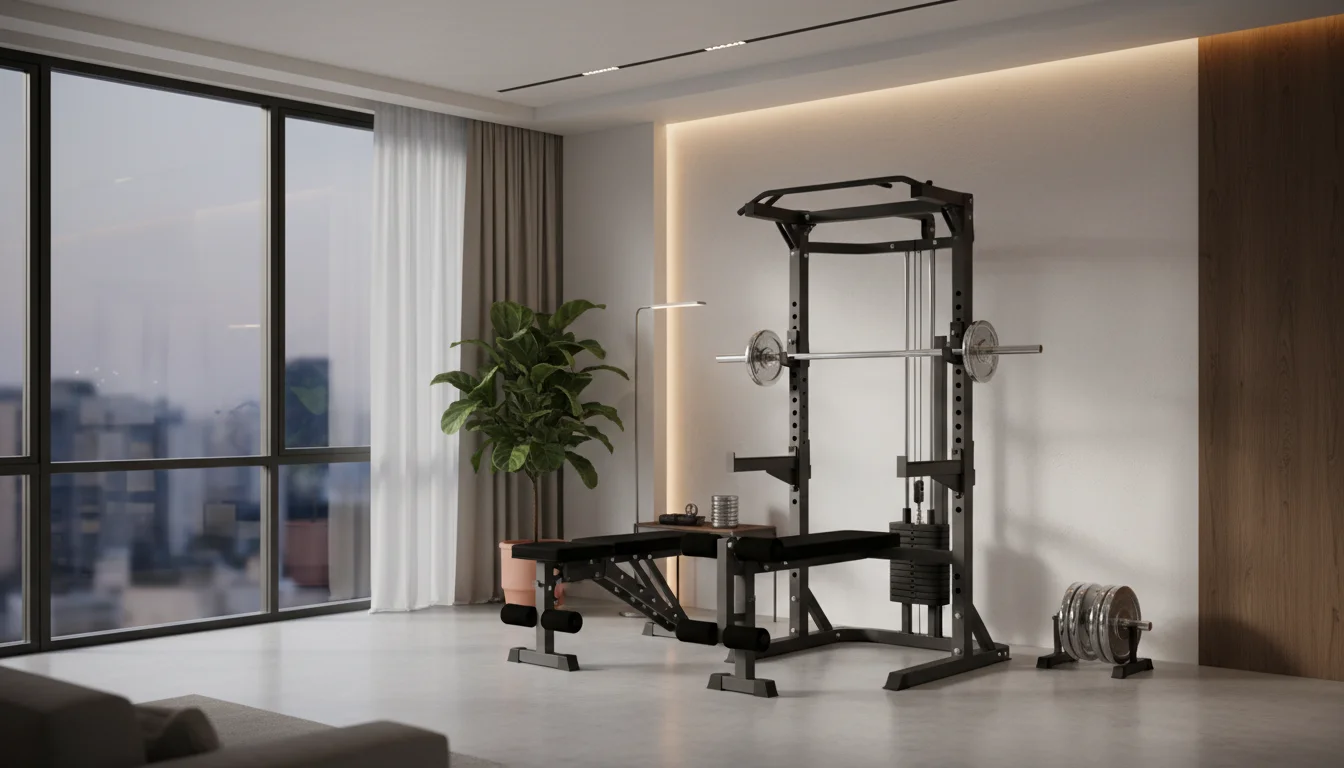
Is a Smith Machine Practical for Apartment Living?
The answer depends entirely on your available space, ceiling height, and neighbor tolerance. Most apartment dwellers with a spare bedroom or dedicated corner find success. Studio apartments rarely work.
Advantages for solo apartment training:- Guided bar path eliminates the need for a spotter during heavy lifts
- Built-in safety stops prevent you from getting pinned under weight
- A single piece of equipment handles squats, presses, rows, and lunges
- Less lateral movement means fewer unexpected crashes than free weights
- Minimum footprint of 7 feet by 4 feet required
- Ceiling height of at least 8 feet for most models
- Machine weight ranges from 260 to 600+ pounds
- Noise transmission through floors affects downstairs neighbors
| Factor | Minimum Requirement | Ideal Setup |
|---|
| Floor space | 7' x 4' | 8' x 6' |
|---|---|---|
| Ceiling height | 8 feet | 9+ feet |
| Room type | Spare bedroom | Dedicated gym room |
| Floor type | Concrete slab | Ground floor unit |
| Neighbor situation | Vacant below | No shared walls |
If you check three or more boxes in the "Ideal Setup" column, you have a strong candidate space. Two or fewer? Consider the alternatives section below.
Space Requirements and Choosing the Right Smith Machine
Compact and folding models reduce the footprint to around 48 inches wide by 54 inches deep. Traditional stationary machines need closer to 60 by 65 inches of dedicated floor space.
Smith machine types compared:| Type | Footprint | Weight | Best For | Price Range |
|---|
| Folding (Force USA, Titan) | 48" x 36" folded | 400-500 lbs | Limited space, multi-use rooms | $1,500-$2,500 |
|---|---|---|---|---|
| All-in-one combo | 55" x 65" | 700-750 lbs | Replacing full gym setup | $2,000-$3,500 |
| Traditional stationary | 60" x 70" | 500-600 lbs | Dedicated gym rooms | $800-$1,800 |
| Compact residential | 48" x 54" | 260-350 lbs | Apartments, beginners | $500-$1,200 |
Measure your doorways before ordering. Most smith machines arrive partially assembled, and base frame pieces often measure 6 to 7 feet long. Standard interior doors are 32 inches wide—you need that clearance plus maneuvering room.
Assembly requires about 8 by 10 feet of temporary floor space. Plan for this even if your final placement spot is smaller. [Extreme Training Equipment] notes that counterbalanced bar models work better for apartments since they reduce the starting weight and total load on your floor.
Floor Protection and Weight Distribution Safety
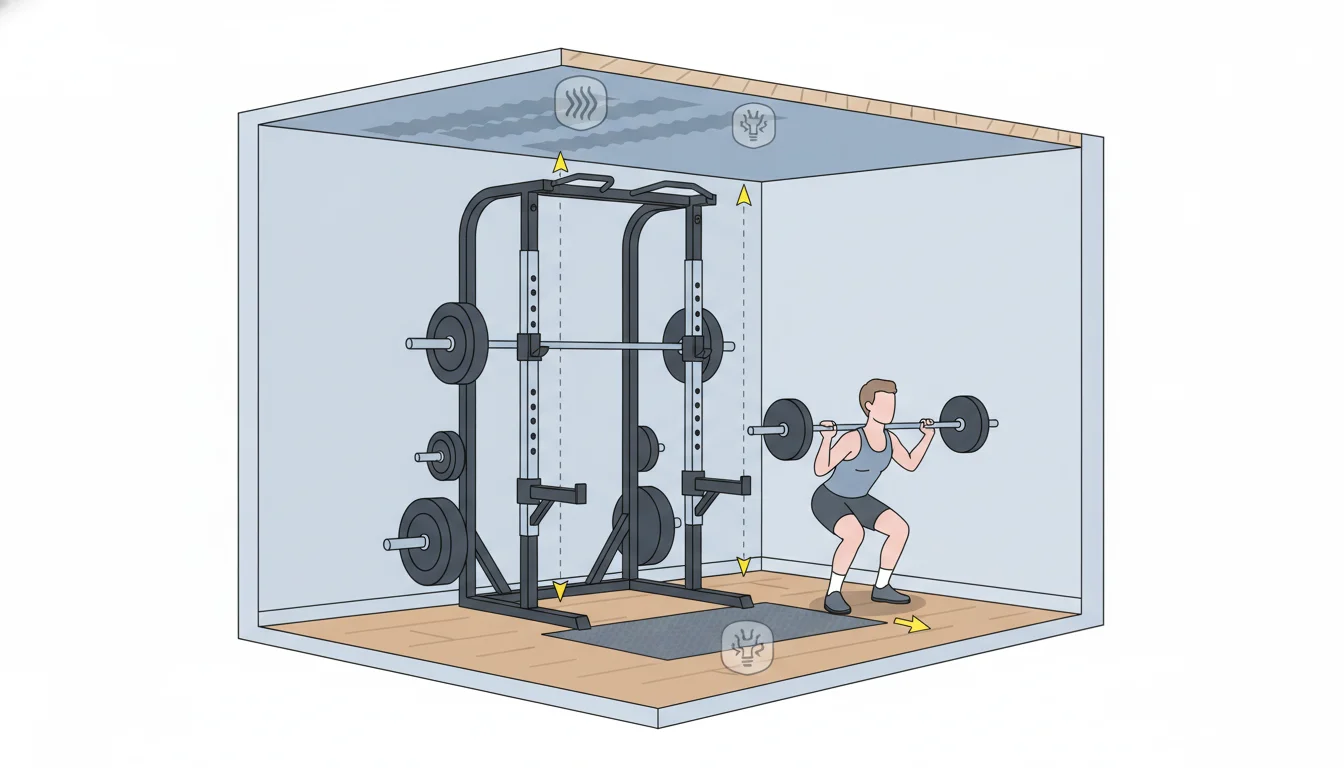
Residential apartment floors support roughly 40 to 50 pounds per square foot of live load. Your smith machine creates a concentrated point load that exceeds this threshold without proper distribution.
Calculate your total load:Add machine weight plus maximum loaded plates plus your body weight. A 300-pound machine with 200 pounds of plates and a 180-pound user equals 680 pounds. On a 4-square-foot footprint, that creates 170 pounds per square foot—three to four times the rated floor capacity.
Load distribution solutions:- Plywood platform base: 3/4-inch plywood spreads weight across more floor joists
- Rubber mat layer: 3/4-inch thick minimum on top of plywood absorbs impact
- Interlocking gym tiles: Protect the flooring surface but don't distribute load as effectively
- Combined approach: Plywood base with rubber top, spanning multiple floor joists
Position your machine perpendicular to floor joists when possible. This spreads the load across multiple support beams rather than concentrating it on one or two. [Parker's Safes] explains that wood-framed floors with 2x10 joists spaced 16 inches apart can handle 1,000 to 2,000 pounds when weight spreads properly.
Warning signs to watch:- Creaking or popping sounds during lifts
- Visible floor sagging or bouncing
- Cracks appearing in the ceiling below
- Feeling floor deflection under your feet
Stop training immediately if you notice any of these signs. Reassess placement or consider lighter equipment.
Noise Control: Keeping the Peace with Neighbors
Impact noise from plate contact and bar racking creates the biggest disturbance. Clanging iron plates produce 80 to 90 decibels when dropped—that rivals a loud motorcycle.
Noise sources and solutions:| Noise Source | Decibel Level | Solution |
|---|
| Iron plates clanging | 80-90 dBA | Switch to bumper plates |
|---|---|---|
| Bar racking hard | 70-80 dBA | Control descent, use rubber stoppers |
| Machine vibration | 50-60 dBA | Thick rubber mats underneath |
| Floor transmission | Varies | Plywood + rubber platform combo |
Bumper plates cost more than iron plates, but they pay for themselves in neighbor goodwill. The dense rubber construction eliminates metal-on-metal contact entirely.
Train during acceptable hours. Most buildings allow noise between 8 AM and 10 PM. Your 6 AM squat session will generate complaints; your lunch break workout probably won't.
The guided bar path actually helps here. Free weight barbells crash laterally when you fail a rep, while smith machines catch failed lifts on the safety stops with controlled contact. [Research on noise exposure] shows that sounds above 85 dBA cause stress and cognitive impairment over time. Your neighbors will appreciate your efforts to stay below that threshold.
Talk to your downstairs neighbor before you start. A quick conversation explaining your setup and inviting feedback prevents escalation to landlord complaints.
Landlord Permissions and Lease Considerations
Check your lease for weight limits, equipment restrictions, or floor modification clauses before purchasing. Many leases prohibit "heavy exercise equipment" without defining the term.
Common lease restrictions:- Weight limits per square foot in specific rooms
- Prohibition on floor modifications including platforms
- Requirements for professional installation of heavy items
- Liability clauses for structural damage
- Noise provisions with specific decibel limits
1. Document your planned equipment with manufacturer specs
2. Show your floor protection plan with diagrams
3. Provide your renter's insurance policy details
4. Offer to pay for a structural assessment if needed
5. Propose a trial period with inspection checkpoints
Many landlords approve requests when tenants demonstrate responsibility. Written documentation matters—get approval in writing before delivery.
If denied, ask specifically what concerns them. Worried about weight distribution? Offer a larger platform. Noise concerns? Commit to training hours in writing. Floor damage fears? Offer an increased security deposit.
Some landlords simply won't budge. Ground floor units have more success than upper floors, and concrete slab construction faces fewer objections than wood-framed buildings.
Smith Machine vs. Alternatives for Small Spaces
A power rack or squat stand takes less floor space but requires a spotter for heavy lifts. Cable systems offer versatility but lack heavy compound movement capability.
Equipment comparison for apartments:| Equipment | Footprint | Solo Safety | Exercise Variety | Cost |
|---|
| Smith machine | 7' x 4' | Excellent | High | $500-$3,000 |
|---|---|---|---|---|
| Squat rack | 4' x 4' | Moderate | High | $300-$800 |
| Power tower | 4' x 3' | Excellent | Limited | $150-$400 |
| Cable system | 5' x 3' | Excellent | Moderate | $400-$1,500 |
| Adjustable dumbbells | 2' x 2' | Excellent | High | $300-$700 |
Choose a smith machine when you train alone, prioritize progressive overload on compound lifts, and have the space. Choose alternatives when floor space is under 25 square feet, ceiling height is under 8 feet, or landlord approval seems unlikely.
Adjustable dumbbells plus a flat bench cost under $500 total and handle 80% of the exercises a smith machine does. No floor protection needed, and no landlord conversation required. The tradeoff is reaching your strength ceiling faster without progressive loading options.
FAQ
How much does a smith machine weigh fully loaded?
Base machine weight ranges from 260 to 750 pounds. Add 300 to 500 pounds of plates for serious lifters. Total loaded weight reaches 800 to 1,200 pounds for most apartment setups.
Do I need to bolt a smith machine to the floor in an apartment?
Most residential smith machines use their own weight for stability. Bolting is unnecessary and would violate most leases. Heavy base plates and proper leveling provide adequate stability for weights under 400 pounds.
What ceiling height works for a smith machine?
You need a minimum of 8 feet for compact models, while standard machines require 9 feet. Measure your ceiling and compare it to the machine's stated height, then add 6 inches for overhead press clearance.
Will a smith machine damage hardwood floors?
Without protection, yes. Machine feet create dents, and dropped weights cause cracks. A proper platform with 3/4-inch plywood and rubber matting prevents all damage when installed correctly.
How do I move a smith machine into an upper floor apartment?
Disassemble it completely. Most components weigh under 50 pounds individually. Use a furniture dolly for the main uprights and expect three to four trips up the stairs. Professional movers charge $200 to $400 for smith machine delivery and assembly.
Are folding smith machines worth the extra cost?
For multi-use rooms, yes—you gain 15 to 20 square feet when folded. For dedicated gym spaces, traditional models offer better stability at lower cost. Keep in mind that the folding mechanism adds potential failure points over time.
What exercises work best on an apartment smith machine?
Squats, bench press, shoulder press, bent rows, and hip thrusts. These compound movements justify the equipment investment. Isolation exercises like curls work but don't require the machine's features.
How loud is a smith machine compared to free weights?
About 15 to 20 decibels quieter during normal use. The guided path prevents lateral bar crashes, and controlled racking eliminates the loudest impact sounds. Bumper plates reduce remaining noise by another 10 to 15 decibels.