Are Smith Machines Safe? A Science-Based Analysis of Risks and Benefits
Are Smith Machines Safe? A Science-Based Analysis of Risks and Benefits
Are Smith machines safe? The answer depends on how you use them. Approximately 90% of weightlifting injuries occur with free weights, making guided machines statistically safer for many lifters. This article breaks down when Smith machines protect you, when they create risk, and how to use them correctly.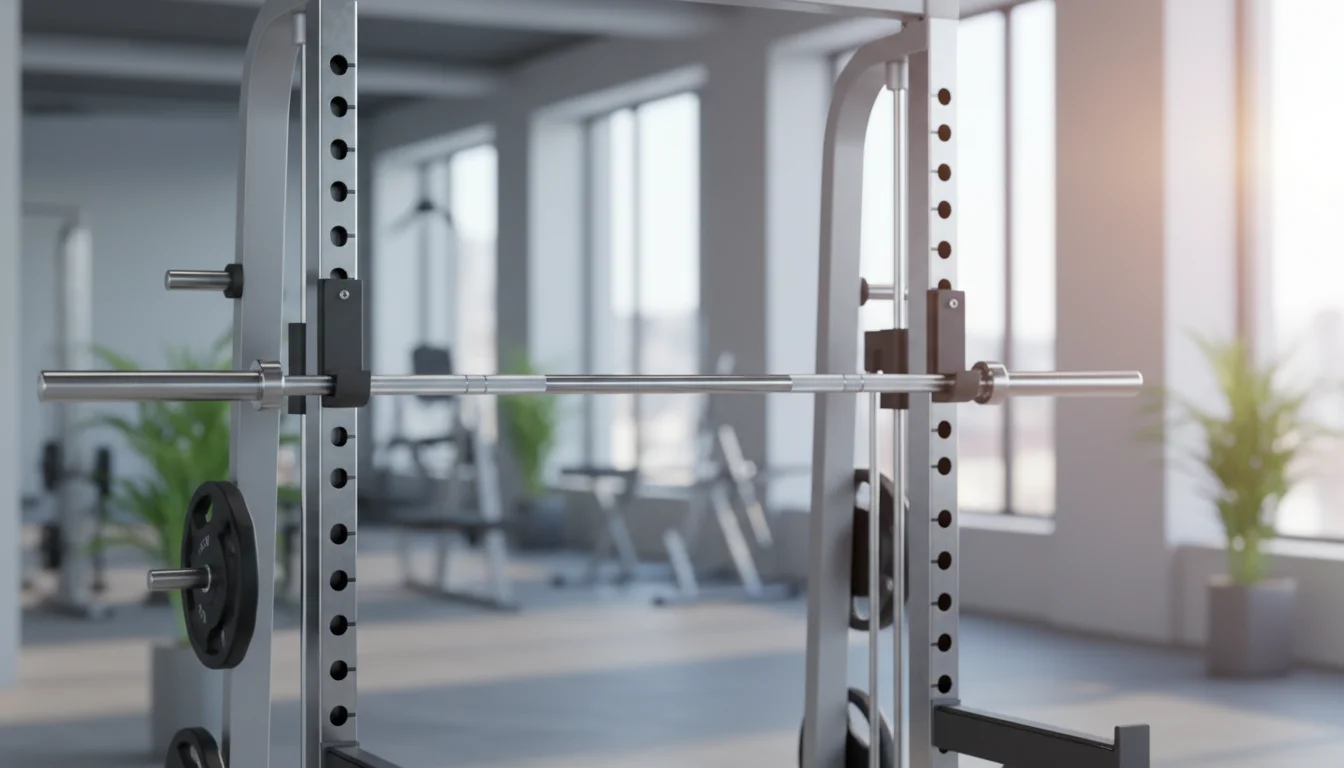
How Smith Machines Work: Understanding the Fixed Bar Path
The barbell rides on steel guide rails, moving only up and down along a predetermined track. This fixed bar path eliminates the need to balance the weight yourself.
Traditional vertical Smith machines restrict all lateral and rotational movement. The bar slides on linear bearings with minimal friction, creating smooth vertical motion. Angled variants tilt the rails 7–10 degrees forward, which some lifters find more natural for squats and presses.
Safety features include:- Adjustable hook points along the rails for quick racking with a wrist twist
- Safety stops that prevent the bar from dropping below a set height
- Secure lockout positions at multiple heights
The guided path allows you to lift more weight with less stabilization demand. This makes the Smith machine excellent for isolation work but potentially problematic for movements requiring natural bar paths.
The Biomechanics Debate: Why Critics Say Smith Machines Are Risky
The fixed track forces your body to adapt to the machine rather than the machine adapting to you. This creates legitimate biomechanical concerns backed by research and clinical observation.
Key concerns from critics:| Issue | What Happens | Affected Exercises |
|---|
| Unnatural movement pattern | Body compensates for fixed path | Squats, deadlifts, overhead press |
|---|---|---|
| Reduced stabilizer activation | Supporting muscles don't engage | All compound movements |
| Joint stress concentration | Force travels through fixed angles | Knees during squats, shoulders during bench |
| Muscle imbalance development | Prime movers strengthen while stabilizers lag | Long-term training effect |
Your natural squat path curves slightly forward and back. The Smith machine doesn't allow this adjustment. Studies show barbell squats produce up to 43% greater muscle activation compared to Smith machine squats, according to research from Mend Colorado.
The criticism isn't overblown. Deadlifts require freedom to shift the bar path around your knees and shins. Forcing a vertical pull changes the entire lift mechanics and loads your lower back differently.
When Smith Machines Are Actually Safer Than Free Weights
Training alone without a spotter changes the safety equation entirely. The Smith machine's built-in catches prevent the bar from crushing you if you fail a rep.
Smith machines provide superior safety for:- Solo lifters: Twist your wrists to rack the bar instantly at any point in the movement. No spotter needed.
- Beginners: Focus on movement patterns without worrying about balance. The guided path teaches muscle engagement before adding stability demands.
- Rehabilitation patients: Reduced stability requirements let you rebuild strength without risking re-injury from wobbling under load.
- Isolation training: Target specific muscles without stabilizers limiting your working weight.
- Confidence building: Lift heavier loads safely before progressing to free weights.
The American College of Sports Medicine notes that machines require less skill to use safely. This matters when fatigue compromises form during high-rep sets.
I learned this lesson after nearly getting pinned under a barbell bench press while training alone. The Smith machine lets me push to failure without that risk.
Exercise-Specific Safety Analysis: Squats, Bench Press, and More
Some exercises work well on the Smith machine. Others become injury risks. Knowing the difference keeps you safe.
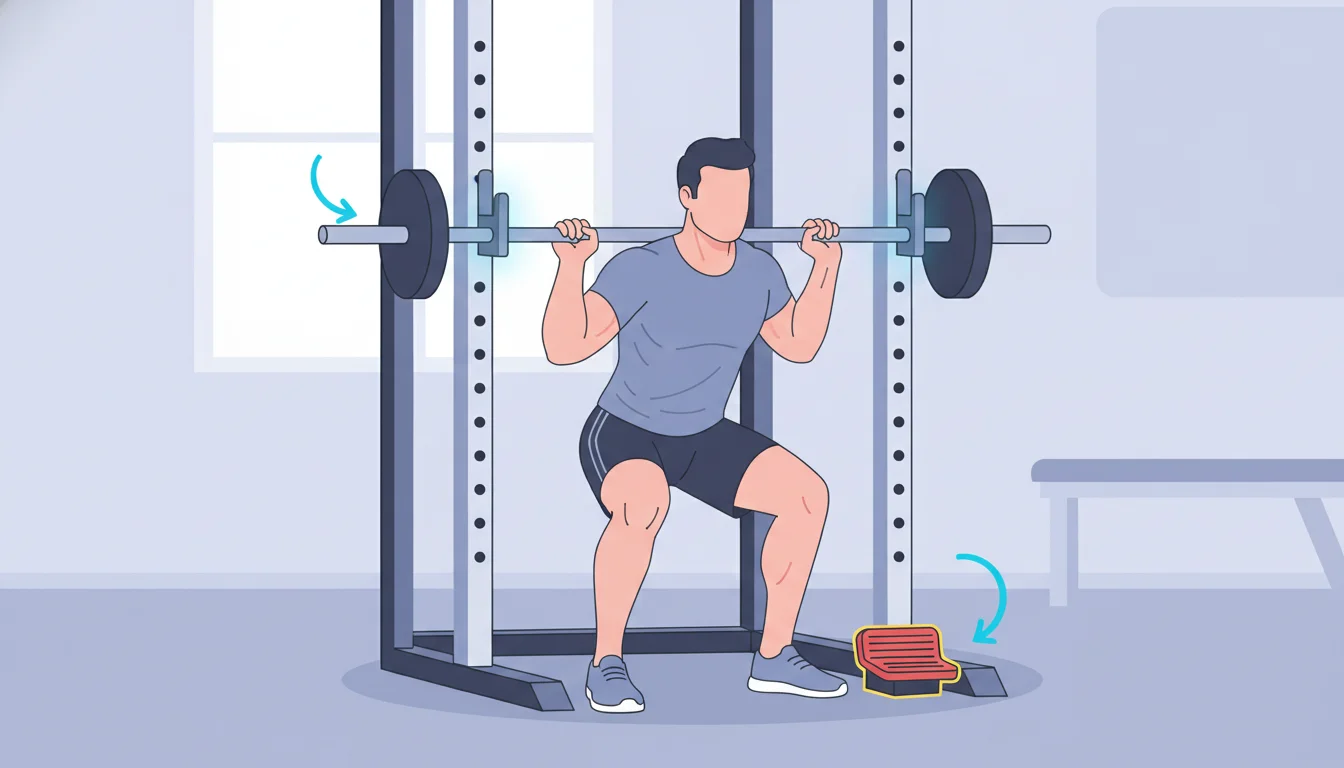
Smith machine squat safety:Position your feet 6–12 inches in front of the bar, not directly underneath it. This forward foot placement accommodates the vertical bar path. Keeping feet under the bar forces your knees forward excessively, creating shear stress.
Smith machine bench press considerations:The fixed path doesn't follow your natural pressing arc. Set up with the bar tracking over your mid-chest. Avoid flaring your elbows excessively, since you cannot adjust the bar path to compensate.
| Exercise | Smith Machine Suitability | Notes |
|---|
| Calf raises | Excellent | Stability not needed, pure isolation |
|---|---|---|
| Shrugs | Excellent | Vertical path matches natural movement |
| Inverted rows | Excellent | Bar stability helps focus on pulling |
| Hip thrusts | Good | Consistent bar path aids loading |
| Lunges | Good | Guided path helps balance |
| Squats | Moderate | Requires adjusted foot position |
| Bench press | Moderate | Watch shoulder positioning |
| Overhead press | Poor | Natural arc restricted |
| Deadlifts | Avoid | Biomechanics don't match fixed path |
According to Mikolo, bent-over rows and lunges become safer on Smith machines because the guided path compensates for balance limitations.
How to Use a Smith Machine Safely: Essential Technique Tips
Test the safety catches before every working set. Rack the bar at your lowest point, remove your hands, and confirm it holds. This takes five seconds and prevents catastrophic failures.
Essential safety practices:- Set safety stops 1–2 inches below your lowest movement point
- Start with lighter weight to find optimal body positioning
- Position yourself so the bar path aligns with your natural movement
- Stop immediately if you feel joint pain or grinding
- Warm up the specific movement pattern before adding weight
- Squats: Feet forward of the bar line
- Bench: Bar tracks over mid-chest at bottom position
- Shoulder press: Slight torso lean to match bar path
- Rows: Stand where the bar reaches your lower ribcage naturally
Don't use the Smith machine exclusively. Your stabilizers need training too. Mix free weight work into your program weekly.
Fair warning: the machine feels easier because it removes the balance challenge. This tricks people into loading too heavy too fast. Progress conservatively.
Who Should and Shouldn't Use Smith Machines
The right tool depends on your goals, experience level, and physical condition. Smith machines serve some populations better than others.
| User Type | Recommendation | Reasoning |
|---|
| Complete beginners | Recommended | Learn movement patterns safely |
|---|---|---|
| Solo home gym lifters | Recommended | Built-in spotting prevents accidents |
| Bodybuilders | Recommended | Excellent for isolation and mind-muscle connection |
| Post-injury rehabilitation | Recommended | Controlled environment reduces re-injury risk |
| Powerlifters | Use sparingly | Competition lifts require free weight proficiency |
| Olympic lifters | Avoid | Dynamic movements incompatible with fixed path |
| Those with existing joint issues | Consult professional | Fixed path may worsen or improve depending on condition |
The mistake is treating the Smith machine as your only training tool. Use it as one option in your training arsenal. Pair Smith machine isolation work with free weight compound movements for balanced development.
According to Fitness Avenue, this combination approach gives you safety benefits while still developing functional strength and stabilizer muscle coordination.
FAQ
Do Smith machines cause more injuries than free weights?
No. Research indicates 90% of weightlifting injuries involve free weights. Smith machines reduce injury risk through guided movement and safety catches, especially for inexperienced lifters or those training without spotters.
Are Smith machine squats bad for your knees?
They stress knees differently, not necessarily worse. Position your feet 6–12 inches forward of the bar to reduce knee shear. Stop if you feel grinding or pain. Many lifters squat safely on Smith machines for years.
Should beginners start with Smith machines or free weights?
Starting with Smith machines lets beginners learn movement patterns without balance demands. After mastering form, gradually incorporate free weights to develop stabilizer strength. Both have a place in progression.
How much weight should I subtract when switching from Smith machine to free weights?
Expect to lift 10–20% less with free weights initially. The stability demand is real. Start conservative and build up. Your stabilizers catch up within weeks of consistent free weight training.
Do Smith machines build real muscle?
Yes. Muscle growth responds to tension, not equipment type. Smith machines effectively build muscle mass. They lack some functional carryover to real-world movements, but hypertrophy occurs regardless of the stability demand.
Are angled Smith machines safer than vertical ones?
Angled designs (7–10 degrees) better match natural pressing and squatting arcs for most people. This reduces joint stress compared to strictly vertical paths. Try both if your gym offers options.
How often should I use the Smith machine versus free weights?
A balanced approach dedicates 20–40% of your training volume to Smith machines. Prioritize free weights for main compound movements. Use Smith machines for isolation work, training to failure, or when lifting alone.