Is a Smith Machine Worth It? Honest Guide for Home Gyms (2025)
Is a Smith Machine Worth It? Honest Guide for Home Gyms (2025)
A Smith machine is a barbell fixed within vertical steel guide rails, allowing movement only along a predetermined path. Research shows free weights produce 43% greater overall muscle activation than Smith machines during squats. This guide breaks down whether a Smith machine is worth it for your specific training goals, experience level, and home gym setup.
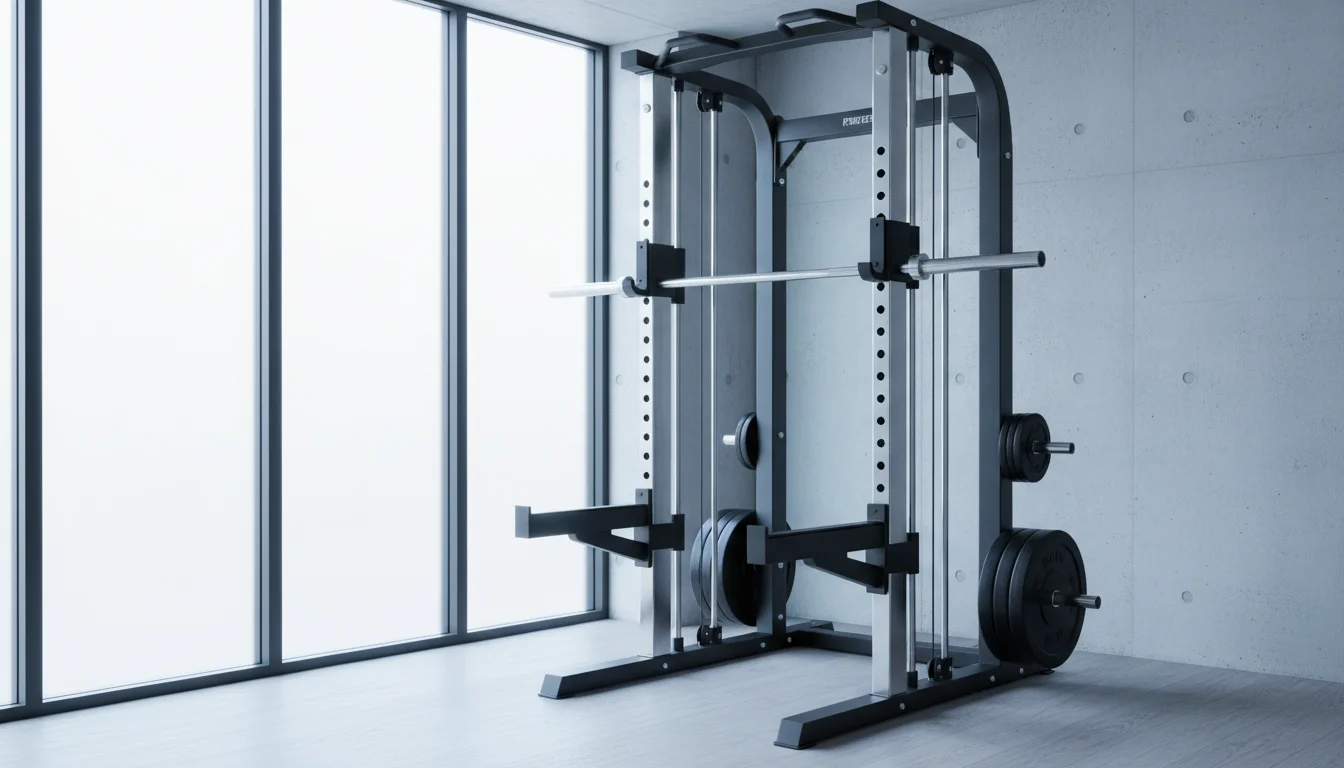
What Is a Smith Machine and How Does It Work?
The barbell travels on vertical or angled rails while integrated hooks let you lock the bar at any height by twisting your wrists.
This self-spotting capability made Smith machines a commercial gym staple since inventor Rudy Smith introduced them decades ago. The safety catch system works through adjustable stops that catch the bar if you fail a lift. No spotter needed.
| Feature | Vertical Smith | Angled Smith | Counterbalanced |
|---|
| Bar Path | Straight up/down | 7-9 degree angle | Straight or angled |
|---|---|---|---|
| Feel | Most restrictive | Mimics natural arc | Lightest resistance |
| Best For | Isolation work | Squats, presses | Beginners, rehab |
| Typical Bar Weight | 15-25 lbs | 15-25 lbs | Feels like 0-15 lbs |
The angled versions better match natural pressing and squatting biomechanics according to [Major Fitness]. I've found the 7-degree angle feels significantly more natural during bench press variations.
Key Benefits of Smith Machines
Safety features let you train alone with heavy weights and push closer to failure without risking injury from a dropped bar.
Why lifters choose Smith machines:- Solo training confidence. Lock the bar instantly at any point during a lift. Push to true failure without fear.
- Learning curve reduction. Beginners build movement pattern confidence before adding balance demands.
- Targeted hypertrophy. Remove stabilizer recruitment to maximize tension on the specific muscle you're training.
- Rehabilitation support. Control range of motion precisely during injury recovery.
- Exercise variety. Hip thrusts, calf raises, inverted rows, drag curls, and shrugs all work effectively.
The isolation advantage surprised me most. When stabilizers aren't fighting to balance the bar, your target muscle gets hammered. [Hampton Fit] notes this makes Smith machines particularly effective for bodybuilding-style training where muscle isolation matters more than movement skill.
Drawbacks and Limitations to Consider
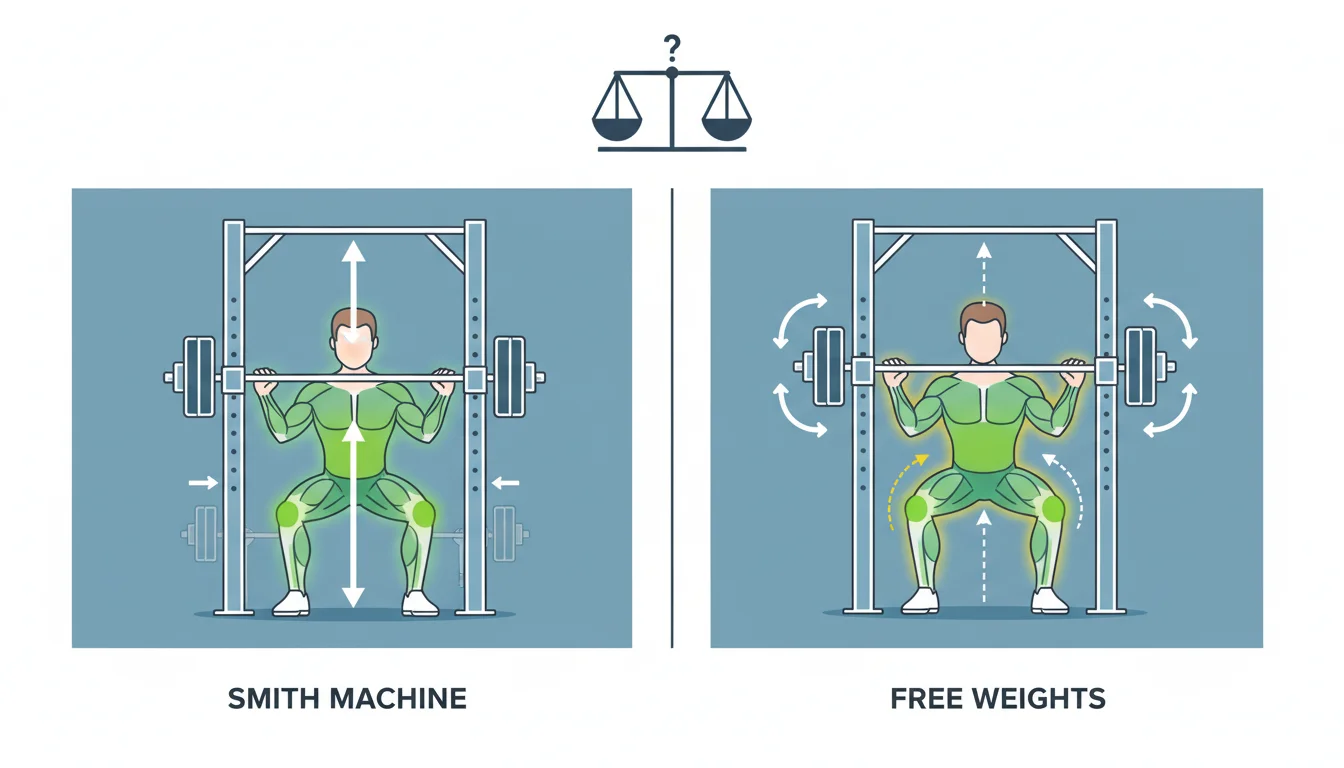
The fixed bar path reduces stabilizer muscle activation and forces your body into a movement pattern that might not match your natural biomechanics.
Real limitations you'll encounter:- Stabilizer muscles get lazy. Your core, rotator cuff, and hip stabilizers work 26-49% less than with free weights.
- Joint stress from mismatched paths. The bar moves straight while your shoulders and hips move in arcs. Something has to give.
- Form habits don't transfer. Strength built on a Smith machine doesn't directly carry over to barbell lifts.
- False confidence with weight. You'll lift more on a Smith machine, but that number means less for real-world strength.
- Reduced functional carryover. Life doesn't happen on a fixed track.
Fair warning: I've watched lifters develop shoulder issues from forcing their bodies into the Smith machine's path during bench press. [The Gym Revolution] recommends treating it as a supplementary tool rather than your primary training method.
Smith Machine vs Free Weights: Which Is Better?
Free weights win for overall muscle activation and functional strength development, while Smith machines excel at safe isolation work and training to failure alone.
| Training Goal | Better Choice | Why |
|---|
| Maximum muscle activation | Free weights | 43% more overall activation in squats |
|---|---|---|
| Safe solo training | Smith machine | Built-in catch system |
| Functional strength | Free weights | Natural movement patterns transfer to life |
| Targeted hypertrophy | Either | Both provide sufficient tension for growth |
| Beginner confidence | Smith machine | Reduced balance demands |
| Rehabilitation | Smith machine | Controlled, predictable path |
| Athletic performance | Free weights | Stabilizer development matters |
Research from PubMed found no significant difference in pectoralis major activation between Smith machine and free weight bench press at 70% and 90% of max effort. The difference shows up in stabilizer muscles like the medial deltoid.
The smart approach uses both. Smith machines for isolation and pushing limits safely. Free weights for building complete, functional strength.
Best Exercises to Perform on a Smith Machine
Hip thrusts, calf raises, and incline presses work better on a Smith machine than many free weight alternatives.
Top Smith machine exercises with form tips:- Hip thrusts. Position your upper back on a bench with feet flat on the floor. The fixed path lets you focus entirely on glute contraction—a game changer for glute development.
- Calf raises. Stand with the balls of your feet on a raised surface. The stability lets you load heavier than standing calf machines allow.
- Incline bench press. Set the bench at 30-45 degrees. Position yourself so the bar path aligns with your natural pressing arc.
- Squats. Place your feet 6-12 inches forward of the bar. This forward foot position accommodates the vertical path and reduces knee stress.
- Shoulder press. Sit slightly in front of the bar path. Press up and slightly back to match natural shoulder mechanics.
The forward foot position during squats feels wrong at first. Trust me—it protects your knees when you're locked into a vertical path. NCSF confirms this adjustment reduces shear forces on the knee joint.
Is a Smith Machine Worth It for Your Home Gym?
A Smith machine is worth the investment if you train alone, prioritize safety, or focus on bodybuilding-style hypertrophy over functional strength.
Cost and space reality check:- Entry-level home units: $400-800
- Quality residential models: $800-1,500
- Commercial-grade: $1,500-3,000+
- Footprint: 7x4 feet minimum, plus working space
- Ceiling height needed: 7-8 feet minimum
- Solo lifters who want to train heavy safely
- Beginners building confidence before graduating to free weights
- Bodybuilders focused on muscle isolation
- Those recovering from injuries who need controlled movement
- Functional strength is your priority
- You have a training partner for spotting
- You plan to compete in powerlifting
- Budget or space is extremely limited
Combo units offering both Smith and free weight stations exist in the $1,200-2,500 range. These provide the best of both worlds for home gyms with adequate space according to [Strength Warehouse USA].
FAQ
How much does a Smith machine bar weigh?
Most Smith machine bars weigh 15-25 pounds, but counterbalanced versions feel like 0-15 pounds. Always test the unloaded bar before calculating your working weight.
Can you build muscle with only a Smith machine?
Yes. Hypertrophy depends on progressive tension and volume, which Smith machines provide effectively. You'll develop less stabilizer strength, but target muscles grow well.
Is the Smith machine bad for knees during squats?
Not when performed correctly. Position your feet 6-12 inches forward of the bar to accommodate the vertical path. This reduces knee shear forces significantly.
Should beginners start with a Smith machine or free weights?
Smith machines help beginners build confidence and learn movement patterns safely. Transition to free weights within 2-3 months to develop stabilizer strength and proper balance.
How often should I use the Smith machine vs free weights?
A 30/70 split works well. Use Smith machines for 1-2 exercises per session focused on isolation or pushing to failure. Prioritize free weights for compound movements.
Can Smith machine strength transfer to barbell lifts?
Partially. The prime mover strength transfers, but you'll need time to develop stabilizer strength and balance when switching. Expect to lift 10-20% less initially on free weights.
What muscles does the Smith machine neglect?
Core stabilizers, rotator cuff muscles, hip stabilizers, and smaller balance muscles throughout your kinetic chain. Supplement with free weight and stability work.
Is a power rack better than a Smith machine for home gyms?
Power racks offer more versatility and better strength transfer at similar prices. Choose a Smith machine for solo heavy training and isolation work. Choose a power rack for well-rounded strength development.