How to RDL on Smith Machine: Complete Form Guide for 2025
How to RDL on Smith Machine: Complete Form Guide for 2025
The Romanian deadlift targets your hamstrings, glutes, and erector spinae through a hip hinge movement pattern. Learning how to RDL on Smith machine provides guided stability that reduces injury risk by 40% compared to free weights for beginners. This guide covers setup, form cues, common mistakes, and programming to help you build serious posterior chain strength.
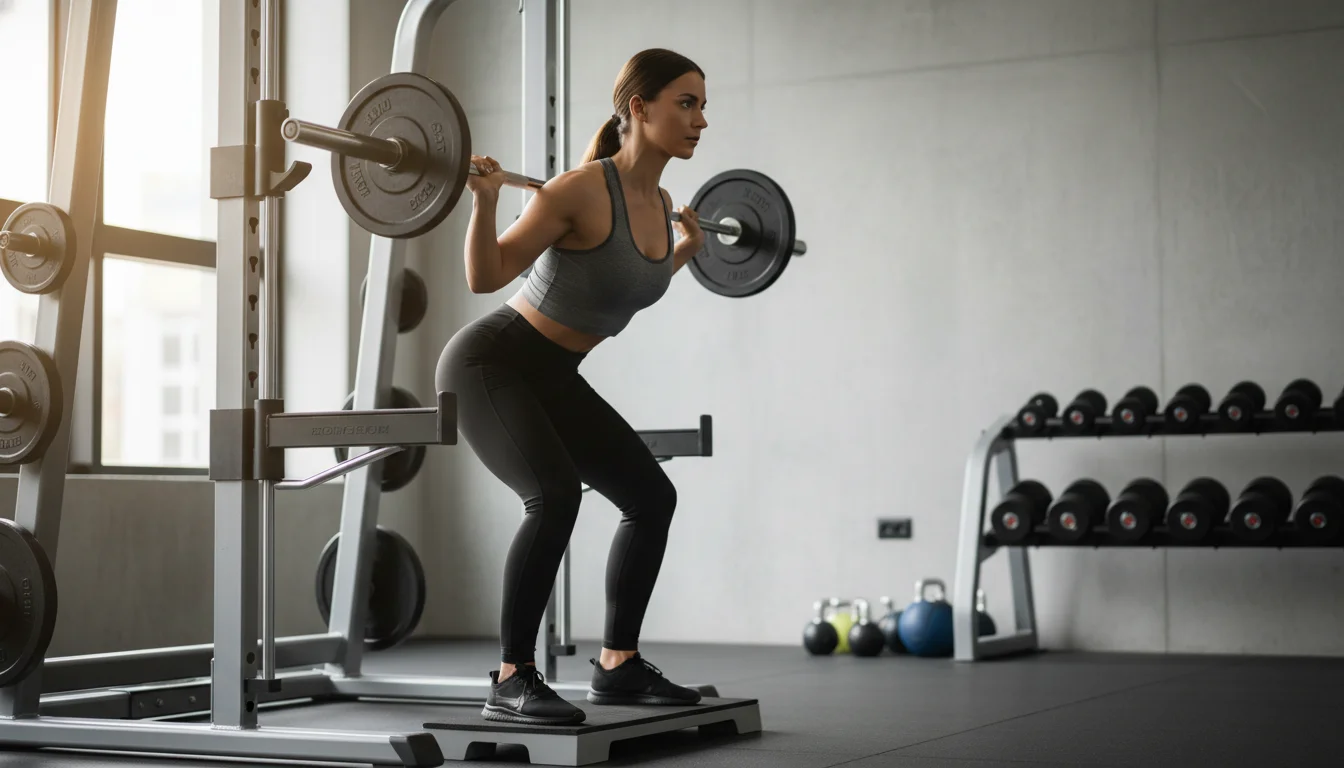
What Is the Smith Machine Romanian Deadlift?
The Smith machine Romanian deadlift isolates your posterior chain using a fixed vertical bar path instead of a free-moving barbell. Your hamstrings and glutes perform the primary work while the machine handles stabilization.
Why lifters choose the Smith machine RDL:- Safety hooks let you train alone without a spotter
- Fixed path forces consistent bar tracking every rep
- Reduced balance demands allow greater focus on target muscles
- Beginners learn hip hinge mechanics without worrying about bar drift
The controversy around Smith machine RDL benefits centers on one tradeoff: you sacrifice stabilizer muscle activation for isolation. For hypertrophy work, this trade makes sense. Your hamstrings don't care whether small stabilizers fired—they care about tension and stretch under load.
Advanced lifters use the Smith machine Romanian deadlift for mind-muscle connection work after heavy barbell sets. Glute activation during the RDL on Smith machine stays high because you can focus entirely on squeezing rather than balancing.
Step-by-Step Smith Machine RDL Setup
Position the bar at hip height before stepping under it. This starting point allows a full range of motion without excessive reaching or hunching.
Proper Smith machine RDL setup sequence:| Step | Action | Key Detail |
|---|
| 1 | Set bar height | Align with hip crease when standing |
|---|---|---|
| 2 | Foot placement | Hip-width apart, under or slightly behind bar |
| 3 | Grip position | Overhand, just outside thighs |
| 4 | Unlock bar | Rotate to disengage safety catches |
| 5 | Adjust stance | Move feet forward or back to match your proportions |
| 6 | Knee position | Maintain soft bend throughout |
The Smith machine RDL technique requires experimentation with foot position. The bar travels straight up and down, but your body doesn't move that way naturally. Spend your first set finding where your feet need to be so the bar tracks smoothly along your thighs.
Fair warning: standing too far forward makes the bar drift away from your legs. Standing too far back causes it to crash into your shins. Small adjustments make a big difference in comfort and bar positioning.
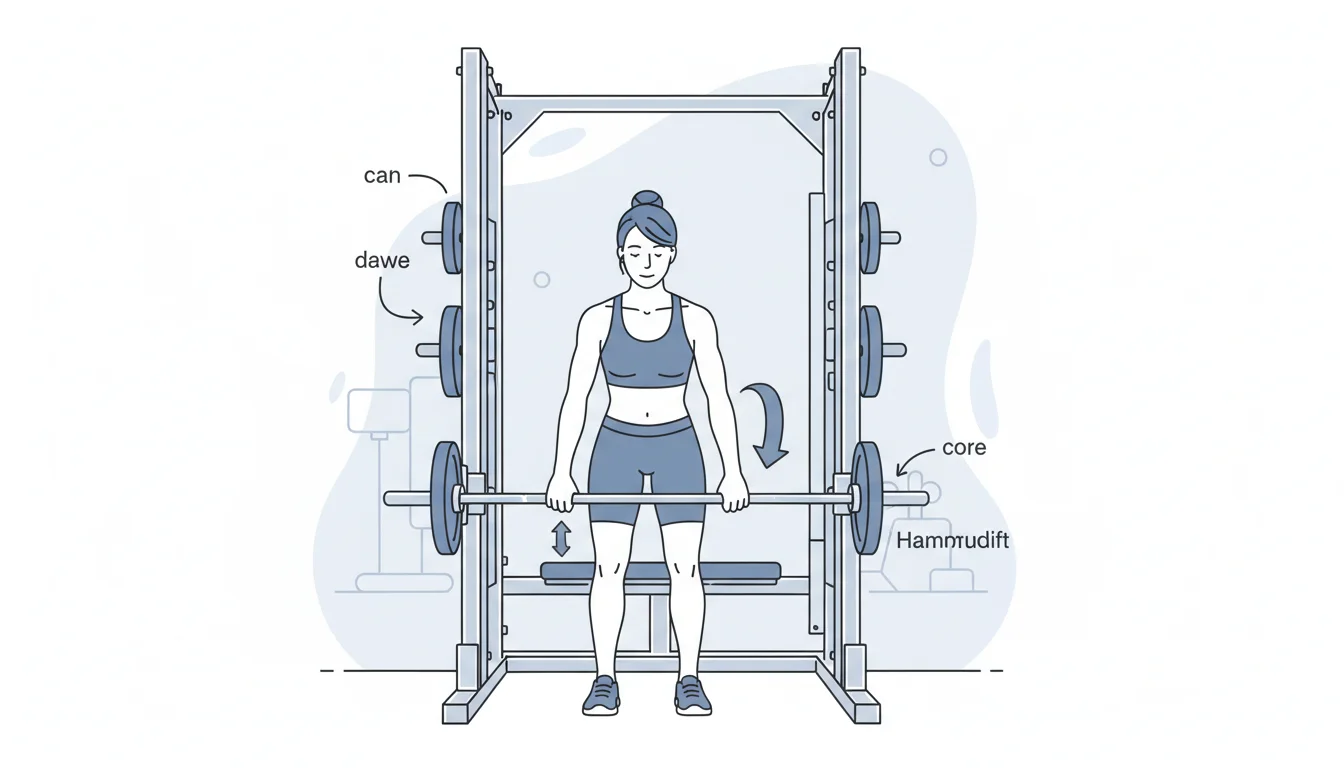
Perfect Your Smith Machine RDL Form
Push your hips backward to initiate the descent rather than bending your spine forward. This hip hinge distinction separates an effective RDL from a dangerous one.
Smith machine RDL form checklist:- Keep your chest lifted with shoulders pulled back
- Slide the bar down your thighs, maintaining contact with your legs
- Descend until your hamstrings reach maximum stretch (mid-shin for most people)
- Drive through your heels on the way up
- Squeeze your glutes hard at the top without hyperextending
- Control the lowering phase for 2-3 seconds minimum
The hip hinge mechanics feel strange at first. Think about closing a car door with your butt—your hips travel backward while your torso tips forward. Your knees stay soft but don't bend further during the movement.
Breathing matters for bracing and safety: inhale on the way down to brace your core, then exhale forcefully as you drive up. This pattern keeps your spine protected under load.
I spent months doing RDLs wrong before someone pointed out my knees were bending too much. The moment I locked in that soft-but-stable knee angle, my hamstring activation doubled. You'll feel the difference immediately.
Common Smith Machine RDL Mistakes to Avoid
Rounding your lower back under load causes most RDL injuries. This typically happens when ego pushes weight selection beyond your hamstring flexibility.
Smith machine RDL mistakes that limit progress:- Going too deep: Stop when your back wants to round, not when the bar reaches a certain point
- Wrong stance position: Standing off the bar path forces compensation patterns
- Locked knees: Straight legs shift stress to your lower back
- Bouncing at bottom: Momentum steals tension from your hamstrings
- Hyperextending at top: Neutral spine means stopping at lockout, not arching backward
- Disconnected focus: Your mind should stay locked on your hamstrings and glutes
RDL form errors compound over time. One slightly rounded rep won't hurt you, but a hundred will. The injury prevention benefit of the Smith machine disappears if you ignore these cues.
Start lighter than your ego wants. Add weight only when your form stays rock solid through every rep of every set. As noted in Gym Mikolo's training guide, maintaining a flat back matters more than the number on the weight stack.
Smith Machine RDL vs Barbell RDL: Key Differences
The fixed bar path changes muscle recruitment patterns and safety considerations between these two variations.
| Factor | Smith Machine RDL | Barbell RDL |
|---|
| Stabilizer activation | Lower | Higher |
|---|---|---|
| Learning curve | Easier | Steeper |
| Solo training safety | Excellent (safety hooks) | Requires careful setup |
| Bar path | Fixed vertical | Natural body mechanics |
| Mind-muscle connection | Enhanced focus | Split attention |
| Max strength potential | Moderate | Higher |
The Smith machine RDL vs barbell debate comes down to your goals. Building raw strength and athletic performance? Graduate to barbells eventually. Chasing hamstring hypertrophy or learning the movement pattern? The Smith machine delivers.
Both versions effectively target hamstrings and glutes when performed correctly. The Smith machine constraints vs free weights debate matters less than consistent training with good form. Pick one, master it, then add the other.
Programming Smith Machine RDLs Into Your Workouts
Target 8-12 reps for muscle growth or 6-8 reps for strength development. Both rep ranges build posterior chain size when taken close to failure.
RDL programming guidelines:- Sets: 3-4 per session
- Rest: 90-120 seconds between sets
- Frequency: 1-2 times per week
- Placement: Early in leg day or pull day as primary hamstring work
- Progressive overload: Add 5-10 lbs when you hit the top of your rep range with solid form
Pair your RDLs with leg curls for complete hamstring development. The RDL trains hamstrings in a stretched position, while leg curls hit them in a shortened position. Together, they cover the full strength curve.
Tempo training works exceptionally well here. Try a 3-1-1-0 pattern: 3 seconds down, 1 second pause at the stretch, 1 second up, no pause at the top. This approach increases time under tension without requiring heavier weights.
FAQ
How much weight should beginners use for Smith machine RDLs?
Start with just the bar or add 10-20 pounds maximum. Your hamstring flexibility limits range of motion more than strength initially. Build the movement pattern before chasing numbers.
Can Smith machine RDLs replace conventional deadlifts?
They serve different purposes. RDLs emphasize hamstring stretch and hip hinge mechanics, while conventional deadlifts train full posterior chain strength from the floor. Use both for complete development.
How deep should I go on Smith machine RDLs?
Descend until you feel a strong hamstring stretch without your lower back rounding. For most people, this means the bar reaches mid-shin to just below the knees. Flexibility varies, so depth varies too.
Should I use straps for Smith machine RDLs?
Straps help when grip fails before hamstrings fatigue. For hypertrophy training where muscle failure matters, straps let you push sets harder. For general strength work, train grip alongside the movement.
How often can I train Smith machine RDLs?
Most lifters recover well training RDLs twice per week with 72 hours between sessions. Listen to your hamstrings—lingering soreness or tightness means you need more recovery time.
Is the Smith machine RDL good for glute development?
The movement strongly activates glutes during hip extension. Squeeze hard at the top of each rep and combine with hip thrusts for maximum glute growth, since they train different parts of the range of motion.
What shoes work best for Smith machine RDLs?
Flat, hard-soled shoes provide stable ground contact. Running shoes compress under load and reduce force transfer. Barefoot or minimalist shoes work well if your gym allows them.