Can You Do RDLs on a Smith Machine? Complete Guide to Form, Benefits & Technique (2025)
Can You Do RDLs on a Smith Machine? Complete Guide to Form, Benefits & Technique (2025)
Can you do RDLs on a Smith machine? Yes, and the fixed bar path makes this variation ideal for learning proper hip hinge mechanics. The guided motion reduces balance demands while still loading the hamstrings and glutes effectively. This guide covers proper form, muscle activation, common mistakes, and programming strategies for all experience levels.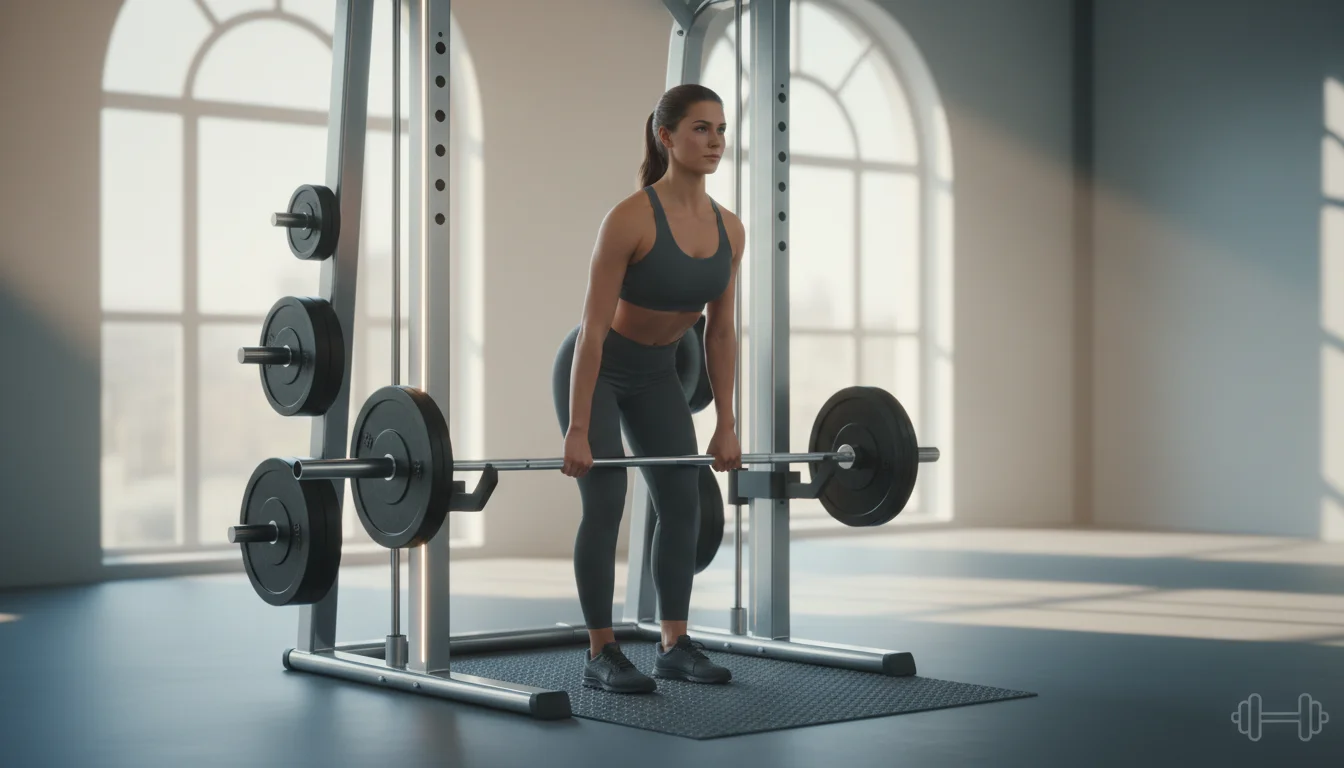
Why Smith Machine RDLs Work (Despite What Critics Say)
The fixed bar path teaches hip hinge mechanics better than critics admit. The guided trajectory eliminates the need to balance, letting you focus entirely on pushing your hips back and feeling your hamstrings stretch.
EMG research confirms that RDLs activate the lumbar erector spinae and posterior chain muscles regardless of equipment choice [ACE Fitness]. The movement pattern remains identical—your hamstrings stretch, your glutes fire, and your lower back stabilizes.
When Smith machine RDLs make sense:- Learning the hip hinge for the first time
- Returning from lower back or hamstring injury
- Training alone without a spotter
- Focusing on mind-muscle connection over strength development
- Building confidence before progressing to free weights
The limitation is real but often overstated. Stabilizer muscles get less work because the machine handles balance for you. For pure athletic performance or powerlifting competition, barbell RDLs remain superior. For hypertrophy and learning proper mechanics, the Smith machine delivers.
I spent three months doing only Smith machine RDLs after a back tweak. My hamstrings grew noticeably, and I returned to barbell work with better form than before. The fixed path forced me to feel what a proper hip hinge should feel like.
Muscles Worked During Smith Machine RDLs
The posterior chain does the heavy lifting here. Primary movers include the hamstrings and glutes, with significant support from the lower back.
| Muscle Group | Role | Activation Level |
|---|
| Hamstrings (biceps femoris, semitendinosus, semimembranosus) | Primary mover, controls descent | High |
|---|---|---|
| Glutes (gluteus maximus) | Hip extension at top | High |
| Erector spinae | Spine stabilization | Moderate-High |
| Core (transverse abdominis) | Trunk stability | Moderate |
| Forearms/grip | Bar control | Moderate |
| Upper back (lats, traps) | Shoulder positioning | Low-Moderate |
Compared to barbell RDLs, the Smith machine version shows slightly lower core activation due to reduced stability demands. However, hamstring and glute activation remains comparable when form stays consistent.
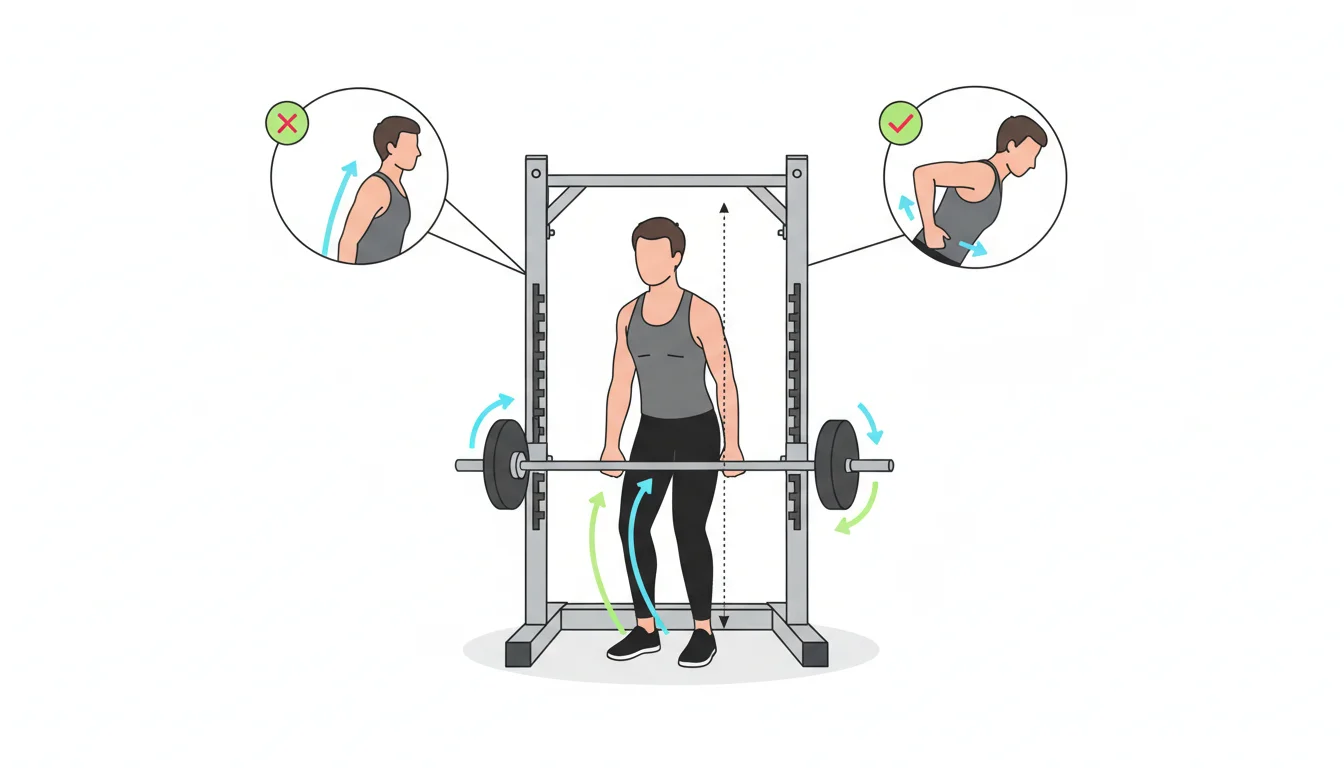
How to Do RDLs on a Smith Machine: Step-by-Step Guide
Setup determines success. Position the bar at mid-thigh height with safety stops below knee level.
Equipment Setup:- Bar height: mid-thigh when standing
- Feet: shoulder-width apart, toes angled slightly outward
- Position: bar travels directly over mid-foot throughout the lift
- Grip the bar just outside your legs, slightly wider than shoulder-width
- Roll shoulders back, lift chest, maintain a neutral neck
- Unlock knees with a slight bend—not a squat position
- Unhook the bar and stand tall
1. Inhale deeply and brace your core
2. Push your hips straight back like closing a car door with your butt
3. Keep the bar sliding down your thighs, staying close to your body
4. Maintain a flat lower back throughout
5. Lower until you feel a strong hamstring stretch, typically at mid-shin level
6. Stop before your lower back starts to round
The Ascent:1. Drive your hips forward explosively
2. Squeeze your glutes hard at the top
3. Exhale as you stand
4. Stop when standing tall—do not lean backward
Fair warning: most people stand too far from the bar on their first attempt. The bar should practically scrape your legs on the way down. If there's daylight between the bar and your thighs, step closer.
Standing on a 2-inch platform increases range of motion if the safety stops limit your depth. This works especially well for taller lifters.
Common Mistakes and How to Fix Them
Form breaks ruin this exercise faster than almost any other movement. Here are the errors I see constantly.
Rounding the lower back:The fix is simple but requires discipline. Keep your chest up and imagine showing someone the logo on your shirt throughout the entire set. The moment your lower back rounds, the set is over.
Standing too far from the bar:When the bar drifts forward, tension leaves your hamstrings and dumps into your lower back. Stand close enough that the bar touches your legs throughout the movement.
Bending knees too much:This turns an RDL into a weird squat hybrid. Your knees should bend slightly at the start and stay in that position. All movement comes from the hips.
Not actually hinging:Many people bend forward at the waist instead of pushing their hips back. Think about reaching your butt toward the wall behind you, not bowing to someone in front of you.
Going too heavy too soon:Start with just the bar or 25% of your conventional deadlift max. The Smith machine makes it tempting to load up, but form mastery comes first.
Hyperextending at the top:Stop when you're standing straight. Leaning back puts unnecessary shear force on your lumbar spine.
Rushing the lowering phase:Control the descent for 2-3 seconds minimum. This is where muscle growth happens. Speed reps cheat you out of results.
Smith Machine RDL vs Barbell RDL: Key Differences
Both tools work. Your goals determine which fits better.
| Factor | Smith Machine RDL | Barbell RDL |
|---|
| Bar path | Fixed vertical | Follows natural body mechanics |
|---|---|---|
| Stabilizer activation | Lower | Higher |
| Learning curve | Easier | Steeper |
| Safety | Built-in stops, easy to bail | Requires technique to fail safely |
| Balance requirement | Minimal | Significant |
| Posterior chain loading | Effective | Effective |
| Athletic transfer | Lower | Higher |
| Isolation potential | Higher | Lower |
Choose the Smith machine when you're learning the pattern, rehabbing an injury, training without a spotter, or specifically targeting hamstring hypertrophy.
Choose the barbell when training for athletic performance, competing in strength sports, or developing overall posterior chain function including stability.
Let's be honest: fitness purists dismiss Smith machines too quickly. The equipment matters far less than consistent effort and progressive overload. Many lifters have built impressive hamstrings using Smith machine RDLs exclusively.
Programming Your Smith Machine RDLs: Sets, Reps & Frequency
Training frequency and volume depend on your experience level and recovery capacity.
Beginner (0-6 months training):- 3 sets of 10-12 reps
- 2 sessions per week
- 60-90 seconds rest between sets
- Focus on feeling the hamstring stretch, not the weight lifted
- 3-4 sets of 8-10 reps
- 2 sessions per week
- Add 5 pounds when all reps feel controlled
- Consider pairing with leg curls for complete hamstring development
- Vary rep ranges: 6-8 for strength, 10-15 for hypertrophy
- Use tempo variations: 4 seconds down, 1 second pause, 2 seconds up
- Pair with hip thrusts or good mornings for posterior chain emphasis
- Program based on your overall training split
1. Master the bodyweight hip hinge against a wall
2. Perform empty bar Smith machine RDLs for 3x12
3. Add weight in 10-pound increments
4. Progress to barbell when form is automatic
Increase weight only when every rep of every set feels controlled. Grinding through ugly reps teaches bad patterns.
Variations and Alternatives on the Smith Machine
The standard bilateral Smith machine RDL is your foundation. These variations add challenge once you've mastered the basics.
Single-leg Smith machine RDL:Stand on one leg and hinge while extending the free leg behind you. The Smith machine provides enough stability to make this accessible while still challenging your balance. Start with half your normal weight.
Deficit Smith machine RDL:Stand on a 2-4 inch platform. The increased range of motion creates more hamstring stretch at the bottom. Only use this variation if you can maintain a flat back through the extended range.
Pause RDLs:Hold the bottom position for 2-3 seconds. This eliminates stretch reflex assistance and builds starting strength from the hardest position.
Tempo RDLs:Lower for 4-5 seconds, pause for 1 second, lift for 2 seconds. Time under tension increases dramatically, making lighter weights brutal.
Other Smith machine posterior chain exercises:- Hip thrusts with back on bench
- Bulgarian split squats with rear foot elevated
- Sumo stance deadlifts for inner thigh and glute emphasis
Rotate variations every 4-6 weeks to prevent staleness and address different aspects of posterior chain development.
FAQ
Do Smith machine RDLs build muscle as effectively as barbell RDLs?
Yes, for hamstring and glute hypertrophy specifically. The reduced stability demands allow better muscle isolation and mind-muscle connection. Total posterior chain development, including stabilizers, favors barbell work.
How much weight should I use for Smith machine RDLs?
Start with 50-60% of what you'd use for conventional deadlifts. The movement pattern differs significantly. Most men begin productively around 95-135 pounds, while most women start around 55-85 pounds.
Should I use lifting straps for Smith machine RDLs?
Use straps when grip limits your hamstring work. If you're doing high-rep sets and your hands fail before your hamstrings fatigue, straps make sense. Train grip separately.
How low should I go on Smith machine RDLs?
Lower until you feel a significant hamstring stretch, typically when the bar reaches mid-shin. Never sacrifice lower back position for depth. Your mobility determines your range.
Are Smith machine RDLs safe for people with lower back problems?
The fixed bar path reduces unpredictable loading, making this variation safer for many back issues. Start extremely light and consult a physical therapist if you have active pain or injury.
How often should I do Smith machine RDLs?
Two sessions per week with 72 hours between sessions allows adequate recovery for most lifters. More advanced trainees might handle three sessions weekly during specialization phases.
What's the difference between RDLs and stiff-leg deadlifts on the Smith machine?
RDLs maintain a slight knee bend throughout and emphasize the hip hinge. Stiff-leg deadlifts keep legs straighter, increasing hamstring stretch but also lower back stress. RDLs are safer for most people.
When should I progress from Smith machine to barbell RDLs?
Move to barbell when you consistently perform Smith machine RDLs with perfect form at challenging weights for four or more weeks. The pattern should feel automatic before adding stability demands.