Can a Smith Machine Build Muscle? Science-Backed Guide for 2025
Can a Smith Machine Build Muscle? Science-Backed Guide for 2025
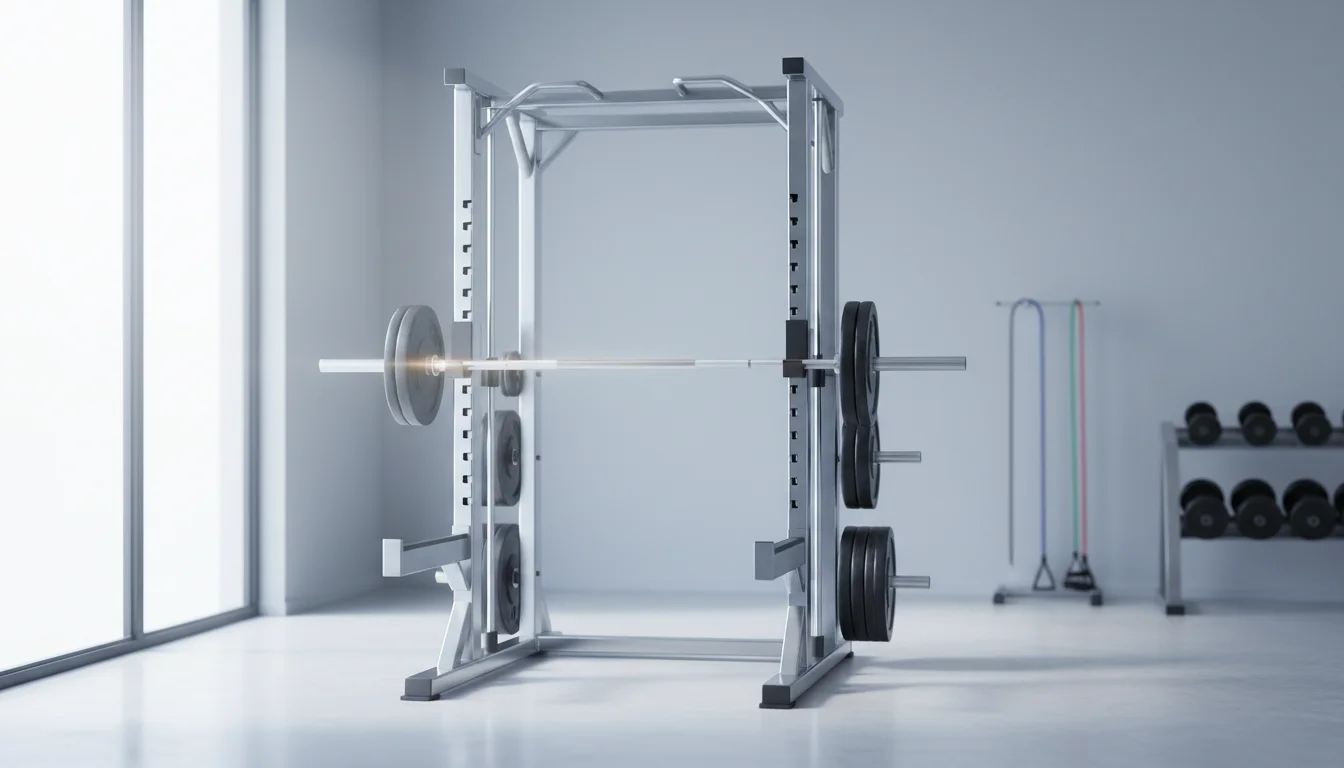
The Smith machine is a weight training apparatus featuring a barbell fixed within steel rails, allowing vertical or near-vertical movement. EMG studies show comparable muscle activation between Smith machine and free weight exercises for primary muscle groups like the pectoralis major. This guide covers the science behind Smith machine hypertrophy, the best exercises for growth, programming strategies, and who benefits most from this equipment.
How the Smith Machine Builds Muscle: The Science Explained
Can a Smith machine build muscle as effectively as free weights? Yes. Muscle growth requires mechanical tension, metabolic stress, and muscle damage—and the Smith machine delivers all three.| Hypertrophy Factor | How the Smith Machine Delivers It |
|---|
| Mechanical tension | Fixed path allows heavier loads on primary movers |
|---|---|
| Metabolic stress | Controlled tempo creates sustained time under tension |
| Muscle damage | Full range of motion produces adequate microtears |
| Progressive overload | Easy weight increments enable systematic progression |
The fixed bar path eliminates balance demands, letting you focus entirely on contracting target muscles through each rep. Research from PubMed confirms similar chest activation between Smith machine and free weight bench pressing.
I spent years avoiding the Smith machine because internet forums called it "useless." My chest development stalled. Adding Smith machine pressing changed everything.
Smith Machine vs Free Weights: Which Builds More Muscle?
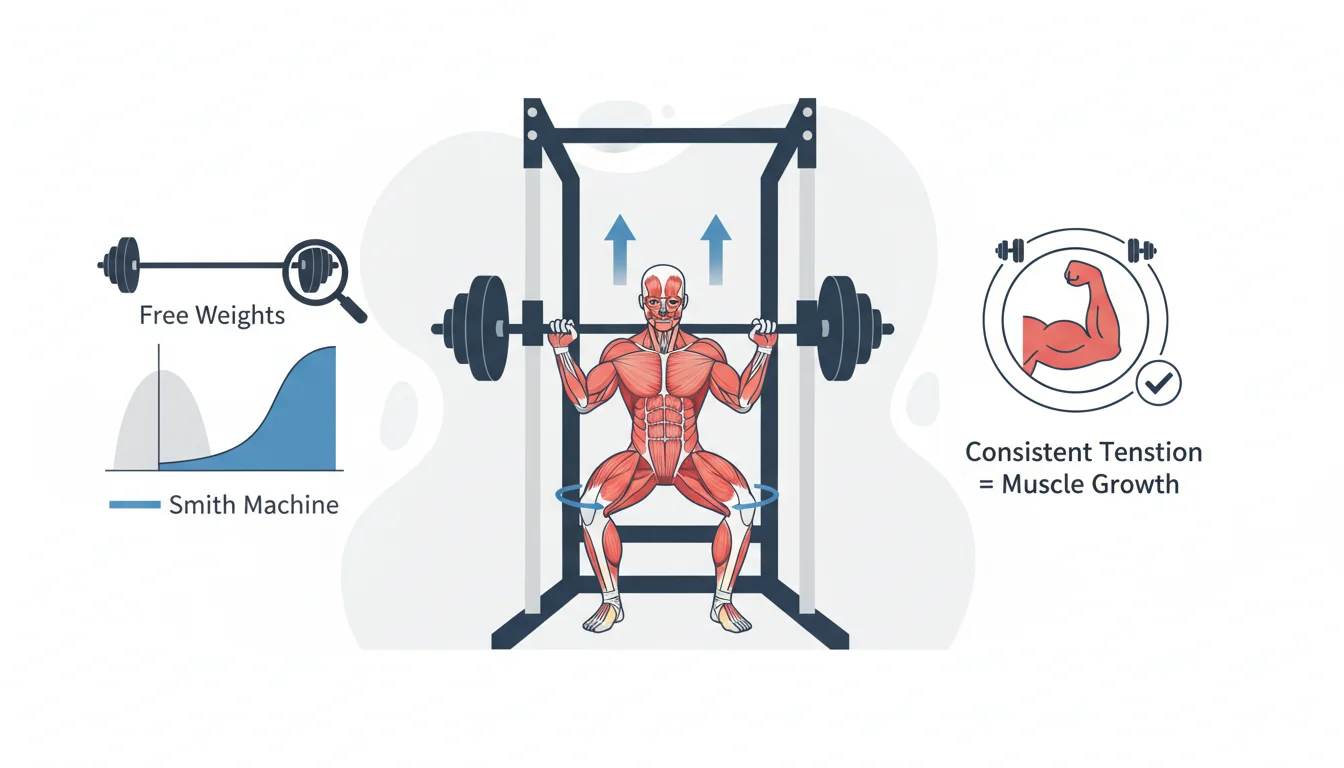
Free weights recruit more stabilizer muscles, while Smith machines allow greater loading on primary movers. Both build comparable muscle when volume and intensity match.
| Factor | Smith Machine | Free Weights |
|---|
| Primary muscle activation | High | High |
|---|---|---|
| Stabilizer recruitment | Low | High |
| Maximum load potential | Higher (no balance needed) | Lower (balance limits load) |
| Injury risk | Lower | Higher |
| Functional carryover | Moderate | High |
| Solo training safety | Excellent | Requires spotter |
The smart approach combines both tools. Use free weights for compound strength development. Use the Smith machine to isolate lagging muscles and train safely alone.
Best Smith Machine Exercises for Muscle Growth
Smith machine exercises excel at isolating specific muscles through controlled movement paths. The key is adjusting your body position to match the fixed bar trajectory.
Upper Body Exercises:- Smith machine bench press: Position yourself so the bar touches your lower chest. Keep feet flat and stop just short of lockout to maintain chest tension.
- Shoulder press: Sit with your back slightly in front of the bar path. Press straight up and control the descent for 2-3 seconds.
- Inverted rows: Set the bar at hip height. Pull your chest to the bar and squeeze your shoulder blades together at the top.
- Smith squats: Place feet 12 inches in front of the bar. This shifts stress to your quads and reduces knee strain.
- Lunges: The fixed path lets you focus on leg drive without balance concerns.
- Calf raises: Use a platform under your toes. Achieve a full stretch at the bottom and full contraction at the top.
- Bicep curls: Stand close to the bar. Keep elbows pinned and curl with strict form.
- Tricep presses: Use a setup similar to close-grip bench. Focus on the lockout.
- Shrugs: Go heavy with controlled reps. Hold the top position for 2 seconds.
Programming Your Smith Machine Workout for Maximum Hypertrophy
Optimal muscle growth requires hitting each muscle group twice weekly with 10-20 total sets. Rep ranges between 8-12 work best for most lifters.
Sample 3-Day Full Body Split:| Day | Exercise | Sets x Reps |
|---|
| Monday | Smith bench press | 4 x 8-10 |
|---|---|---|
| Smith squats | 4 x 10-12 | |
| Smith rows | 3 x 10-12 | |
| Wednesday | Smith shoulder press | 4 x 8-10 |
| Smith lunges | 3 x 12 each leg | |
| Smith shrugs | 3 x 12-15 | |
| Friday | Smith incline press | 4 x 10-12 |
| Smith Romanian deadlifts | 3 x 10-12 | |
| Smith calf raises | 4 x 15-20 |
- Add 5 pounds when you hit the top of your rep range for all sets
- Increase sets before increasing weight for stubborn muscles
- Slow your tempo to 3 seconds down, 1 second up
- Reduce rest periods from 90 to 60 seconds
Rest 60-90 seconds between sets for hypertrophy. Longer rest suits strength work, while shorter rest increases metabolic stress.
Common Smith Machine Mistakes That Limit Muscle Growth
Poor positioning on the Smith machine creates joint stress and reduces muscle activation. The fixed bar path demands specific body placement.
- Wrong foot position on squats: Feet directly under the bar loads your joints instead of your muscles. Move feet forward 12-18 inches.
- Partial reps: The safety catches tempt lifters to cut range short. Full stretch and full contraction drive growth.
- Relying on safeties: Bouncing off the catches robs your muscles of the hardest portion. Control every rep.
- Fixed spine position: Your body must adjust to the bar path. Experiment with torso angles to find optimal muscle engagement.
- Avoiding weight increases: The Smith machine's stability means you can lift heavier than with free weights. Push the load progressively.
I made the foot position mistake for months. My knees ached after every session. Moving my feet forward fixed the problem immediately, and my quad growth accelerated.
Who Benefits Most from Smith Machine Training?
Certain lifters gain more from Smith machine training than others. The equipment's characteristics match specific training needs.
- Beginners: Learn movement patterns with reduced injury risk before adding free weight complexity.
- Solo trainers: Press heavy without a spotter. The safety catches prevent getting pinned.
- Injury recovery: Controlled paths reduce aggravation of existing issues while maintaining training stimulus.
- Bodybuilders: Isolate specific muscles for targeted development. The mind-muscle connection improves without balance demands.
- Plateau breakers: Overload primary movers beyond free weight capacity to spark new growth.
FAQ
Does the Smith machine bar weigh anything?
Most Smith machine bars weigh 15-25 pounds, depending on the counterbalance system. Commercial gym machines often use counterweights that reduce effective bar weight to near zero. Always test your specific machine before calculating total load.
How often should I train on the Smith machine?
Train each muscle group twice weekly using Smith machine exercises. This frequency optimizes protein synthesis while allowing adequate recovery. Split your sessions to avoid training the same muscles on consecutive days.
Will Smith machine training transfer to free weight strength?
Strength gains transfer partially. Primary mover strength improves directly, but stabilizer strength requires separate free weight work. Expect your free weight numbers to lag 10-15% behind Smith machine performance initially.
Is the Smith machine bad for your joints?
The fixed path creates problems only with poor positioning. Adjust your body to match the bar trajectory. Proper foot placement on squats and appropriate bench angle on pressing protects joints while maximizing muscle stimulus.
Should I use the Smith machine or free weights first in my workout?
Start with whichever exercise targets your priority muscle group. Fresh muscles respond better to training stimulus. If overall strength is your primary goal, use Smith machines for isolation work after compound free weight movements.
How much more weight can I lift on the Smith machine versus free weights?
Most lifters handle 10-20% more weight on Smith machine versions of exercises. The eliminated balance requirement allows greater loading on primary movers. Track both numbers separately for accurate progress monitoring.